
Business
Umahi decries vandalism on Lagos-Calabar Coastal Highway

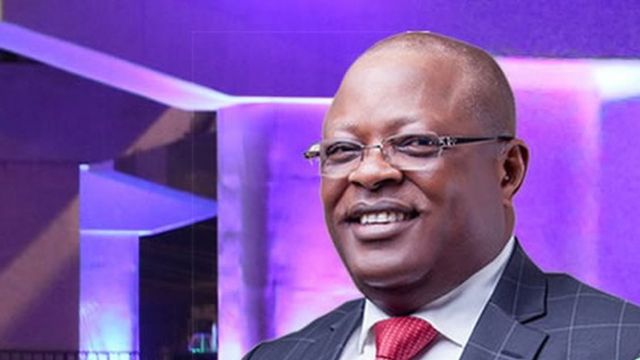
Minister of Works, David Umahi, has decried acts of vandalism along the Lagos–Calabar Coastal Highway corridor, warning that offenders will be prosecuted.
He, however, assured that Section One of the road will be ready for commissioning by May this year.
Umahi gave the assurance on Saturday during an inspection of the project, a flagship infrastructure initiative of the administration of President Bola Tinubu linking Lagos to the South-South and South-East regions.
The minister said a three-kilometre stretch under inspection was nearing completion, with sub-filling expected to be concluded within days.
According to him, once opened, motorists will be able to drive seamlessly from Ahmadu Bello Way in Lagos through Lekki, with access extending towards the Dangote Refinery axis as work progresses on Section Two.
He expressed confidence that Section One would be commissioned by 20 May, subject to the outcome of consolidation tests scheduled for March.
Umahi explained that engineers encountered deep soil conditions, with pits reaching between 18 and 22 metres in some sections, posing significant technical challenges.
He said similar conditions at chainage 18 had previously required six months of exposure to rainfall and the use of a stone base and sharp sand to achieve consolidation.
“For this section, we will conduct consolidation tests in March. If satisfactory, we will lay the Continuously Reinforced Concrete Pavement (CRCP) in April and commission it by May 20,” he said.
The minister commended HITECH Construction Company for absorbing additional costs arising from unexpected soil conditions without seeking an upward review of the contract sum.
Umahi, however, condemned the cutting of metal fences and the dumping of refuse into drainage manholes along the corridor, describing the acts as dangerous and unacceptable.
“It is wrong for anyone to cut the metal fence or open manholes to dump refuse. These actions endanger lives and damage public infrastructure,” he said.
He said security agencies had been directed to arrest and prosecute offenders, adding that a team of senior lawyers has been constituted to handle litigation related to the project.
The minister also said steps were being considered to temporarily seal manholes to prevent easy access.
Beyond the highway project, Umahi linked the pace of work to the broader reform agenda of the Tinubu administration, saying infrastructure delivery remains central to national development.
He said Section Two of the coastal highway is expected to be delivered before the end of the year, while bridges across both sections are projected for completion by April next year.
The minister also warned contractors against misusing Advance Payment Guarantees (APGs), stating that firms that have collected mobilisation funds without returning to the site will no longer be accommodated.
“My directive is clear: any contractor holding government funds must return to the site. Certificates will not be paid while such funds are outstanding,” he said.
Umahi decried vandalism on the Lagos-Calabar Coastal Highway nationwide, urging Nigerians to support ongoing reforms and protect public assets.

The Telecommunications and Technology Sustainability Working Group (TTSWG) has announced plans for the second edition of its annual conference and innovation exhibition, bringing together key stakeholders in Nigeria’s technology and telecommunications sectors.
The event, scheduled for Thursday, September 24, 2026, will be held at the Balmoral Convention Centre, Ahmadu Bello Way, Victoria Island, Lagos.
Tagged the IMC Conference and Innovation Exhibition, the event is sponsored by IHS Nigeria and is expected to attract policymakers, chief executives of leading technology firms, investors, development partners, financial institutions, innovators and thought leaders from Nigeria and beyond.
According to the organisers, the conference is designed to unlock opportunities in Nigeria’s technology and telecommunications sectors, with sustainability at the centre of discussions and innovations.
Other partners supporting the event include Hydrogen, Nigeria Climate Innovation Centre (NCIC), LBS Sustainability Centre (LBSSC) and MTN.
TTSWG said the IMC Conference and Exhibition has emerged as a major platform for innovation and sustainability, following the success of its inaugural edition.
The maiden edition attracted more than 300 physical participants and 759 registrants, while 17 innovative solutions were showcased, helping to promote sustainability-driven entrepreneurship within the technology ecosystem.
The organisers said the second edition would build on that momentum by providing stakeholders with opportunities to network, exchange ideas, showcase innovations and explore practical solutions for sustainable growth in Nigeria’s digital economy.

In a move aimed at reducing estimated billing and closing the country’s metering gap, the Federal Government has deployed 668,000 electricity meters under Phase One of the $500 million World Bank-financed Distribution Sector Recovery Programme (DISREP).
The figure represents about 60 per cent of the 1,033,000 meters delivered under the programme, as the government intensifies efforts to ensure that registered electricity consumers are accurately metered.
The development was disclosed at the second 2026 meeting of the National Council on Privatisation (NCP), chaired by Vice President Kashim Shettima at the Presidential Villa, Abuja.
Briefing journalists after the meeting, the Director-General of the Bureau of Public Enterprises (BPE), Ayodeji Ariyo Gbeleyi, said the council received updates on the implementation of various initiatives designed to improve service delivery and strengthen the electricity sector.
He said the metering initiative remained a key component of ongoing efforts to address challenges in the power sector and improve transparency in electricity billing.
“On various issues, we provided updates on meter deployment under Phase 1 of the World Bank-financed Distribution Sector Recovery Programme. We have implemented 60 percent of the meters that have been delivered in the country out of 1,033,000. So far, we have deployed and installed 668,000 meters on customers’ premises,” Gbeleyi said.
He said the metering initiative, alongside programmes such as the Presidential Metering Initiative, was designed to address the metering deficit and eliminate estimated billing for electricity customers.
Gbeleyi also disclosed that about 17 states had established their own State Electricity Regulatory Commissions since April 2024 as part of the implementation of the Electricity Act.
He noted that Akwa Ibom State became the latest state to establish its own electricity regulatory commission in July.
According to him, some aspects of the implementation of the Electricity Act require further clarification and harmonisation among relevant stakeholders.
He said the NCP had directed the Attorney-General of the Federation, Minister of Power, Special Adviser to the President on Power, Special Adviser to the President on Oil and Gas, Nigerian Electricity Regulatory Commission (NERC), BPE and other stakeholders to engage on the necessary amendments to the law. “Some fine-tuning is required here and there in the implementation of that Act,” Gbeleyi said.
“Council has directed those stakeholders, led by the Attorney General of the Federation, the Honourable Minister of Power, the Special Adviser on Power, the Office of the Special Adviser to the President on Oil and Gas, the Nigerian Electricity Regulatory Commission, the BPE and all other critical stakeholders, should engage constructively so as to streamline and harmonize the Federal Government’s position in terms of the required amendments to fine-tune the Electricity Act.”
Also speaking, the Minister of Power, Joseph Olasunkanmi Tegbe, said the Federal Government was working collaboratively to ensure Nigerians derive greater value from electricity and other critical sectors of the economy.
“We are working concertedly and in a very collaborative manner to ensure that we give value, either in electricity or in telecoms—whichever area—to make sure that Nigerians benefit from this government,” Tegbe said.
The meeting was attended by the Minister of Finance and Coordinating Minister of the Economy, who is the Vice Chairman of the council; the Minister of Power; the Solicitor-General, representing the Attorney-General of the Federation; the Minister of Industry, Trade and Investment; and private members of the council.
The NCP meeting formed part of ongoing efforts by the Federal Government to strengthen reforms in the power and other critical sectors of the economy.
DataPro Management, a licensed and regulated credit rating agency, has announced plans to host its 2026 International Rating Webinar in October.
The webinar, scheduled for October 8, 2026, at 2 p.m. West Africa Time, will focus on the theme, “Sovereign Credit Rating: Africa’s Roadmap to Investment Grade Status.”
The event will bring together experts and stakeholders in the credit rating and public finance sectors to examine Africa’s sovereign credit outlook and strategies for achieving investment-grade status.
Panelists for the webinar include Torsten Schmidt, Head of Macroeconomics and Public Finance Research, RWI; Daniel Cash, Founder, Credit Rating Research Initiative; Oluwakemi Babalogbon, Executive Director, Risk Management, Ministry of Finance Incorporated (MOFI); Kai Gehring, Professor of Political Economy, University of Bern; and Misheck Mutize, Lead Expert on Credit Rating Agencies, African Peer Review Mechanism (APRM).
Oladele Adeyemi, Chief Rating Officer, DataPro, will moderate the session.
Stakeholders in the credit rating industry, financial sector and the media are expected to participate in the webinar, which is free to attend.
The organisers said the event would provide participants with an opportunity to gain insights into sovereign credit ratings and the steps African economies can take to attract investment and improve their credit standing.


Igbokoda crash: Olugbo mourns victims, consoles Tinubu, Air Force

Accident: Normalcy returns to Lagos roads as LASEMA rescues hit-and-run victim

LASEMA responds to multiple emergencies
-

 Fashion9 years ago
These ’90s fashion trends are making a comeback in 2017
-
Entertainment9 years ago
The final 6 ‘Game of Thrones’ episodes might feel like a full season
-
Business9 years ago
3 Ways to make your business presentation more relatable
-
Business9 years ago
The 9 worst mistakes you can ever make at work
-
Fashion9 years ago
According to Dior Couture, this taboo fashion accessory is back
-
Sports9 years ago
Steph Curry finally got the contract he deserves from the Warriors
-
Fashion9 years ago
Model Jocelyn Chew’s Instagram is the best vacation you’ve ever had
-
Sports9 years ago
Phillies’ Aaron Altherr makes mind-boggling barehanded play