
News
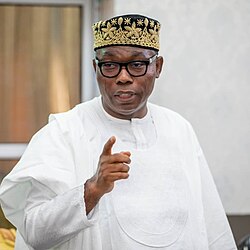
‘Why victory is sure in next elections’








Obaloluwa Darasimi
Six people, on Saturday, lost their lives in separate accidents in different parts of Lagos.
According to a statement signed by the Permanent Secretary of the Lagos State Emergency Management Agency (LASEMA), Dr Olufemi Damilola Oke-Osanyintolu, the first accident happened early in the morning at Sawmill, by Mowo Bus Stop, along the Badagry Expressway.
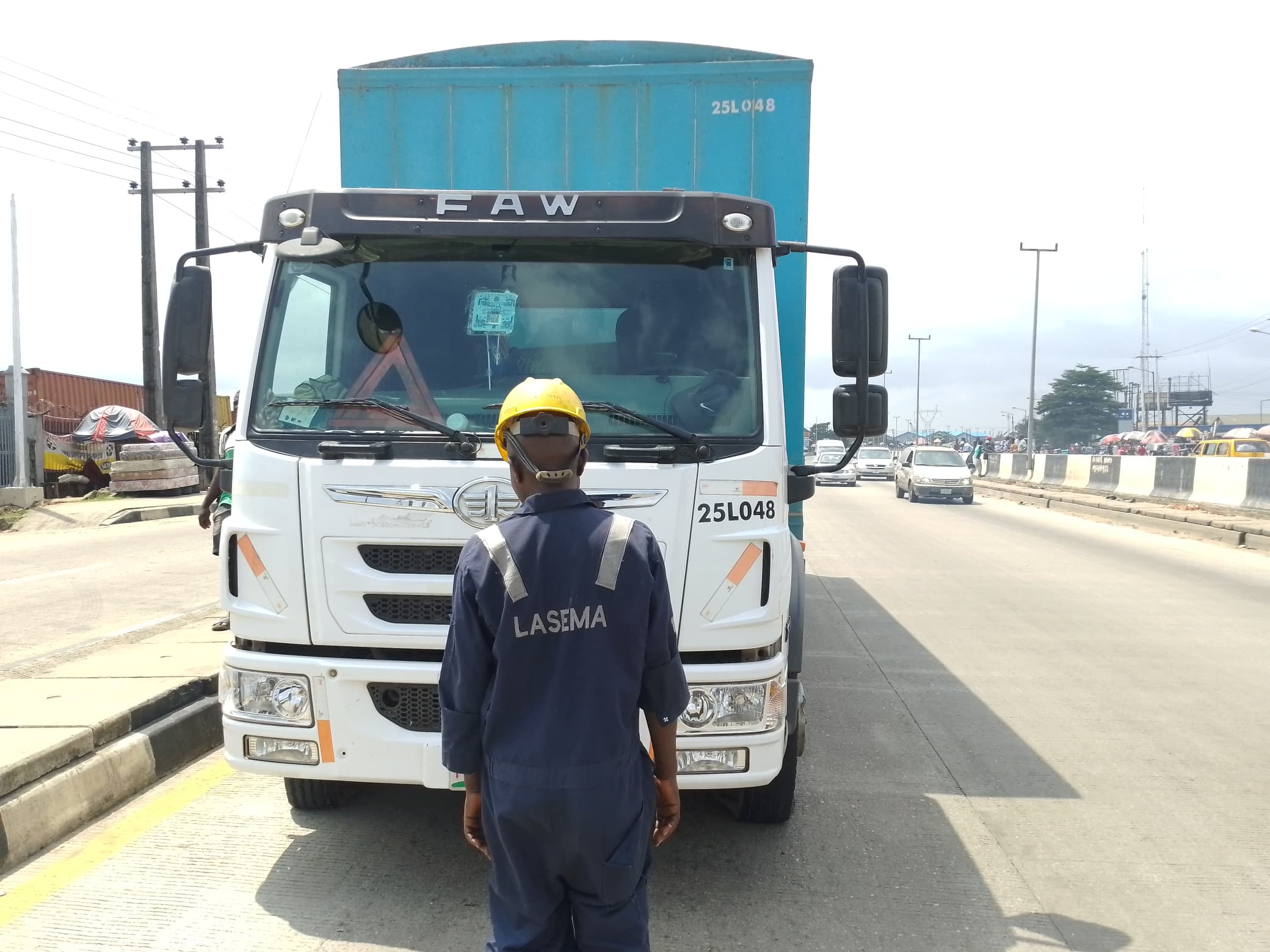
The second incident involved a multiple road traffic accident in the Ijesha, inward Mile 2, area of Lagos, where a dispatch rider lost his life.
The early morning incident, Oke-Osanyintolu disclosed, was a result of a collision between a Toyota Camry with registration number FKJ 630KS and an Iveco truck with registration number T28081 LA.
Five adult males, who were occupants of the Toyota Camry, died in the accident.
“Preliminary investigation revealed that the accident was caused by over-speeding and reckless driving on the part of the Toyota Camry driver.
Explaining the incident at the Ijesha, inward Mile 2, area of Lagos, LASEMA said it discovered that the incident involved a FAW truck with registration number T-30364LA, an Iveco truck with registration number KSF 958 XV, and a dispatch rider.
The FAW truck was said to have hit the Iveco truck while both vehicles were dragging for right of way, and in the process, the Iveco truck struck the dispatch rider from behind.
LASEMA boss further revealed that the multi-agency response team, including the LASEMA Dolphin Team, Lagos State Fire and Rescue Service, Lagos State Traffic Management Authority, LASTMA, FRSC and officers of the Nigeria Police Force, was involved in the rescue operation.
The Permanent Secretary, LASEMA, while commiserating with the families of the deceased, prayed for the repose of their souls.
He also urged all motorists to desist from over-speeding, wrongful overtaking and other dangerous driving practices, especially during early morning hours.
“Road safety is a shared responsibility, and adherence to traffic regulations remains critical to saving lives on Lagos roads.
“LASEMA reaffirms its commitment to prompt emergency response and inter-agency collaboration in line with the T.H.E.M.E.S+ Agenda of the Lagos State Government, aimed at protecting the lives and property of residents,” Oke –Osayintolu concluded.
By Obaloluwa Darasimi
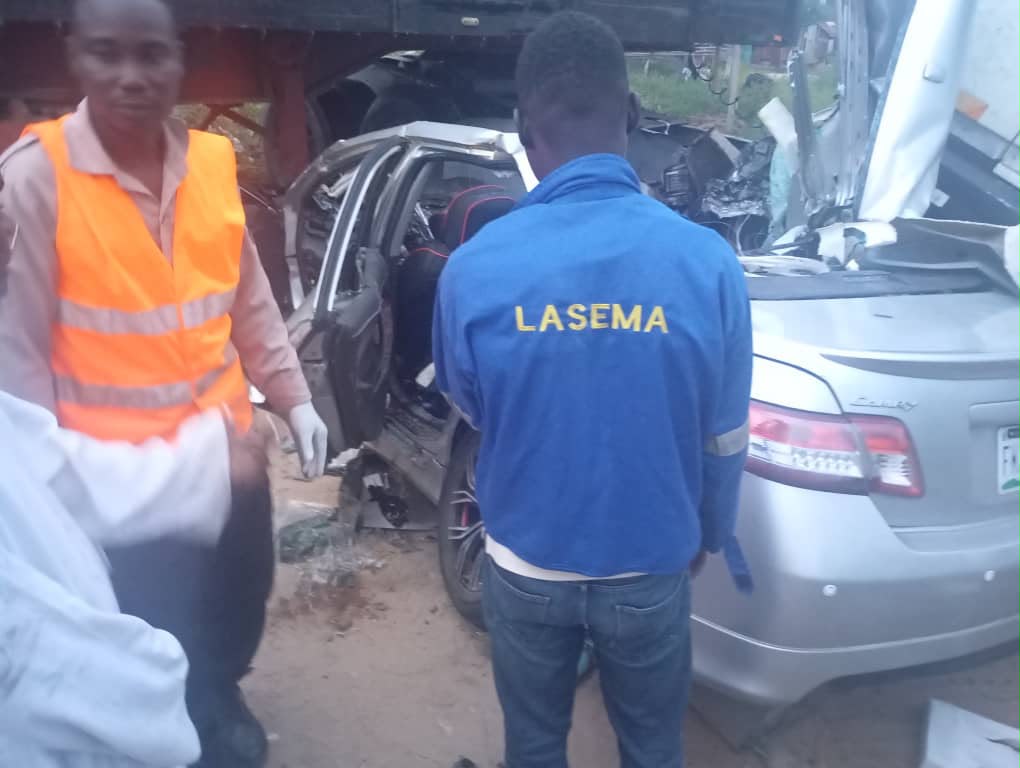
Five people, on Saturday, lost their lives to an early morning accident in Lagos.
In a statement signed by the Permanent Secretary of the Lagos State Emergency Management Agency (LASEMA), Dr Olufemi Damilola Oke-Osanyintolu, the agency received a distress call at 5:16 am and immediately activated its Dolphin Team from Igando Base.
Oke-Osanyintolu disclosed that the accident was the result of a fatal collision between a Toyota Camry with registration number FKJ 630KS and an Iveco truck with registration number T28081 LA.
It was gathered that LASEMA, in collaboration with other emergency responders, swiftly mobilised to the scene of the accident at Sawmill, by Mowo Bus Stop, along the Badagry Expressway, where five adult males, who were occupants of the Toyota Camry, were already dead.
“Preliminary investigation revealed that the accident was caused by over-speeding and reckless driving on the part of the Toyota Camry driver. Regrettably, the impact of the collision resulted in the death of five adult males who were occupants of the Toyota Camry. The remains of the victims were carefully recovered, bagged with dignity, and handed over to officials of the Federal Road Safety Corps, FRSC, for further necessary action,” the statement said.
LASEMA boss further revealed that the multi-agency response team at the scene comprised LASEMA Dolphin Team, Lagos State Fire and Rescue Service, Lagos State Traffic Management Authority, LASTMA, FRSC and officers of the Nigeria Police Force from Morogbo Division.
In a bid to restore normalcy and ensure the free flow of traffic, it was gathered that two tow trucks were deployed to evacuate the accidented vehicles from the expressway.
“The recovery operation was successfully concluded, and the vehicles were taken to Morogbo Police Division. The road has since been cleared and fully reopened to vehicular movement,” Oke-Osanyintolu said.
The Permanent Secretary, LASEMA, while commiserating with the families of the deceased, prayed for the repose of their souls.
He also urged all motorists to desist from over-speeding, wrongful overtaking and other dangerous driving practices, especially during early morning hours.
“Road safety is a shared responsibility and adherence to traffic regulations remains critical to saving lives on Lagos roads.
“LASEMA reaffirms its commitment to prompt emergency response and inter-agency collaboration in line with the T.H.E.M.E.S+ Agenda of the Lagos State Government, aimed at protecting the lives and property of residents,” Oke –Osayintolu concluded.
By Obaloluwa Darasimi
The presidential candidate of the Social Democratic Party (SDP), Dr Adewole Ebenezer Adebayo, has expressed deep sorrow over the reported deaths of about 40 passengers in a boat mishap in Gorau community, Goronyo Local Government Area of Sokoto State.
Adebayo, in a condolence message on Saturday, described the incident as a “heartbreaking tragedy” that had plunged families and the entire community into grief.
He commiserated with the families of the victims, the people of Goronyo and the Sokoto State Government, urging authorities to intensify rescue and recovery efforts.
According to reports, the boat, which was carrying about 40 passengers, including men, women and children, capsized on Thursday. Rescue operations were reportedly still ongoing, with the exact number of casualties yet to be officially confirmed.
Adebayo said the loss of so many lives in a single incident was devastating, stressing that the tragedy should not be treated merely as another unfortunate accident.
He commended rescuers, local fishermen, community members and others involved in the search and recovery efforts, while calling on relevant authorities to do everything possible to account for the victims.
The SDP candidate also expressed concern that the incident occurred barely a year after another boat mishap in Sokoto claimed 10 lives.
In September 2025, a boat carrying residents of Zalla-Bango village who were reportedly fleeing armed bandits capsized in Sabon Birni Local Government Area, resulting in the drowning of all 10 passengers on board.
Adebayo said the recurrence of deadly boat accidents in the state should compel the authorities to take urgent and concrete measures to strengthen water transportation safety.
“Beyond condolences, we must learn from such tragedies and take concrete measures to prevent avoidable deaths. The safety of Nigerians travelling by waterways must receive the same seriousness accorded to other forms of transportation,” he said.
He urged the government to strengthen safety regulations, improve monitoring of boats and waterways, and ensure that adequate emergency response mechanisms were available to protect passengers.
Adebayo prayed for the repose of the souls of those who died in the tragedy and for God to grant their families and loved ones the strength to bear the painful loss.


All North Central For Asiwaju decries Akume’s exclusion from campaign list

Six die in separate Lagos accidents

Five killed in early morning crash
-

 Fashion9 years ago
These ’90s fashion trends are making a comeback in 2017
-
Entertainment9 years ago
The final 6 ‘Game of Thrones’ episodes might feel like a full season
-
Business9 years ago
The 9 worst mistakes you can ever make at work
-
Fashion9 years ago
According to Dior Couture, this taboo fashion accessory is back
-
Sports9 years ago
Steph Curry finally got the contract he deserves from the Warriors
-
Sports9 years ago
Phillies’ Aaron Altherr makes mind-boggling barehanded play
-
Business9 years ago
Uber and Lyft are finally available in all of New York State
-
Entertainment9 years ago
The old and New Edition cast comes together to perform