
News
FCCPC obeys ex parte order over digital lending

Obalolu Darasimi
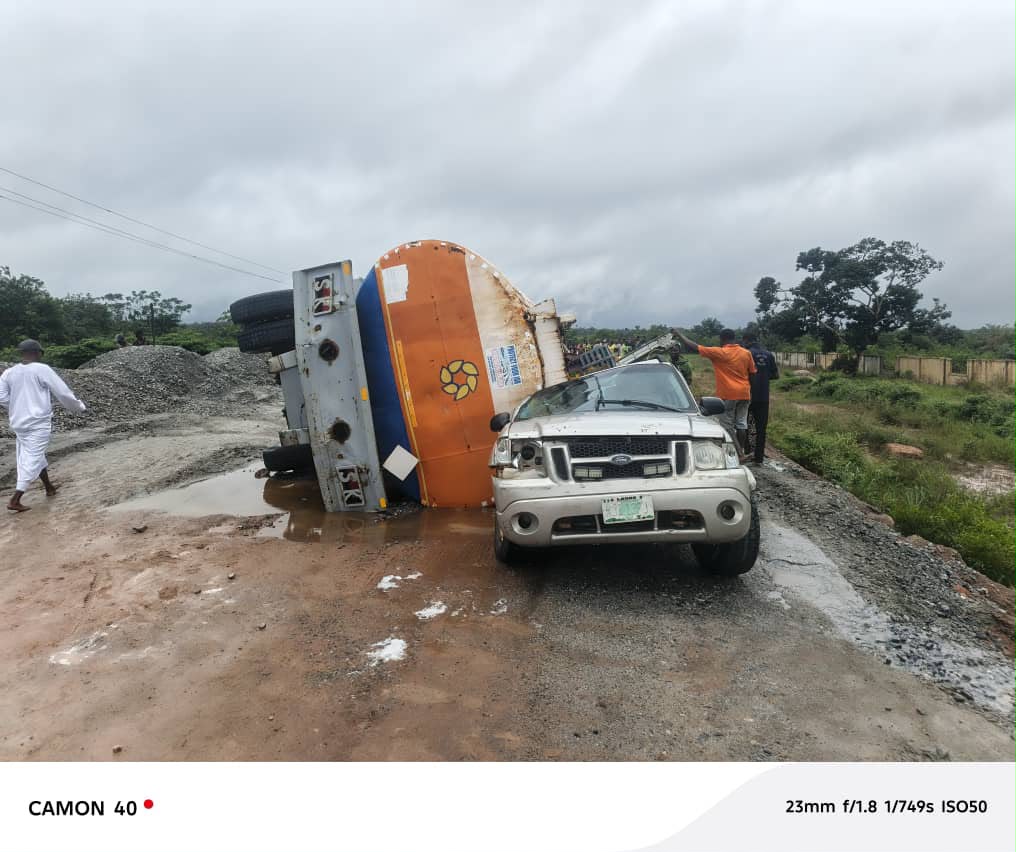
The Lagos State Emergency Management Agency (LASEMA) averted what could have been a major disaster as it recovered a fully loaded tanker with Premium Motor Spirit (PMS) at Isimi Lagos inward Itokin, Epe, Lagos.
Explaining the incident, the LASEMA Permanent Secretary, Dr Olufemi Damilola Oke-Osanyintolu, disclosed that the agency received a distress call at 10:19 a.m.; the agency’s LRT Beta Whales Team stationed at Epe was immediately activated and dispatched to the incident scene.
According to the PS, the tanker, with registration number T-18212LA, crashed into a stationary Ford pickup van loaded with animal feed, with registration number KJA-13FJ.
“Preliminary investigation revealed that the tanker, while attempting to manoeuvre past the stationary Ford pickup van which had developed a mechanical fault along the carriageway, had one of its rear tyres slip into a pit, causing it to overturn and fall onto the pickup van, leading to spillage of its highly inflammable contents onto the roadway,” the PS explained.
In collaboration with the Lagos State Fire and Rescue Service, the Lagos State Traffic Management Authority, LASTMA, the Lagos Neighbourhood Safety Corps, LNSC, the Federal Road Safety Corps, FRSC, and the Nigeria Police Force, promptly secured the incident perimeter, implemented traffic control and diversion measures, and deployed safety protocols to prevent a secondary incident.
“As a proactive measure to mitigate the risk of fire outbreak, the fallen tanker and its immediate surroundings were blanketed with chemical foam by the Lagos State Fire and Rescue Service, while the affected section of the road was temporarily closed to vehicular movement to ensure public safety.
“Through seamless coordination and professional execution, the transloading of the remaining PMS from the accidented tanker to an empty tanker was completed without incident. Subsequently, with the aid of a private tow truck, both the accidented tanker and the affected Ford pickup van were recovered off the roadway and taken to Ketu Police Station. The road has since been reopened and is now free for vehicular activities,” Oke-Osanyintolu said.
Neither loss of life nor injury was recorded in the incident.
Oke-Osanyintolu commended the swift response and synergy of all emergency responders whose professionalism averted what could have resulted in a major disaster.
He also reiterated the commitment of the Lagos State Government under the leadership of Mr Babajide Olusola Sanwo-Olu to the continuous strengthening of emergency preparedness, rapid response capacity, and protection of lives and property across the State.
The Permanent Secretary appealed to motorists, particularly drivers of heavy-duty vehicles and tankers conveying combustible products, to ensure their vehicles are in good mechanical condition, adhere strictly to traffic regulations, and exercise utmost caution on Lagos roads. Members of the public are encouraged to report any emergency or road incident promptly via the 767 and 112 toll-free emergency lines for immediate intervention.
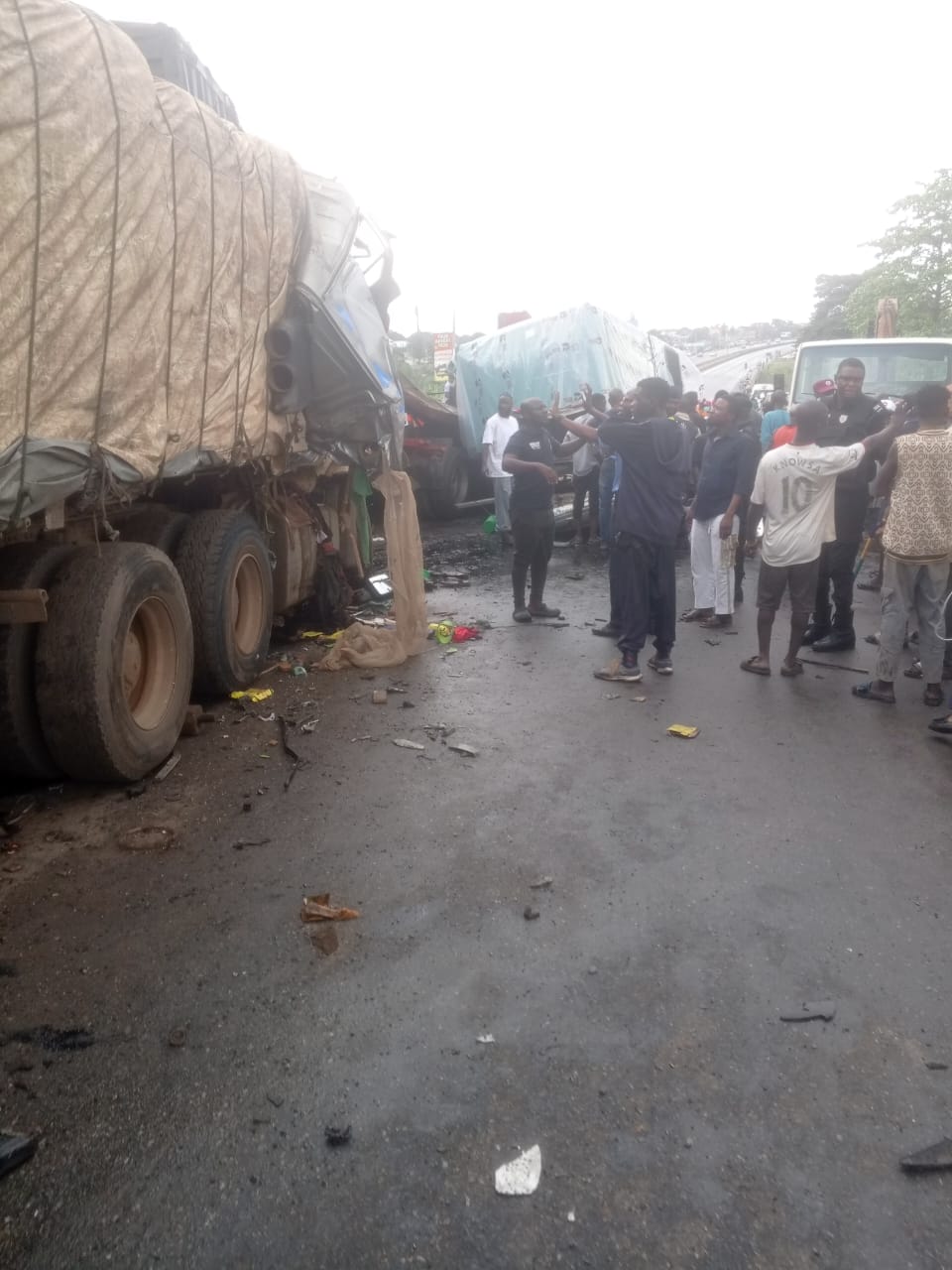
Five vehicles on Monday afternoon crashed on Otedola Bridge, inward Berger
According to a statement by the Permanent Secretary of the Lagos State Emergency Management Agency (LASEMA), Dr Olufemi Damilola Oke-Osanyintolu, the agency promptly responded to the situation by deploying its rescue team to the scene of the accident.
“The LRT Tiger Squad stationed at C3 was dispatched at 1:18 p.m. upon receiving a distress call regarding the incident and arrived at the scene at 1:28 p.m. On arrival, first responders observed a multiple-vehicle crash involving five vehicles, including a truck laden with a generator, a containerised truck with registration number ENU 135ZG, a loaded trailer with an unknown registration number, a white Honda with registration number LSR 870BF, and a Lexus car with registration number KTU 682HX,” Oke-Osanyintolu said.
He explained that the accident was as a result of a containerised truck which developed a mechanical fault while in motion, “resulting in loss of control before ramming into three other vehicles, while another truck subsequently rammed into them from behind, leading to the multiple collision.”
It was gathered that the Agency’s LRT, alongside the Lagos State Traffic Management Authority, LASTMA, and the Nigeria Police Force, promptly implemented traffic control and safety measures to prevent secondary incidents and ensure the safety of road users.
“Through a swift and coordinated rescue operation, all trapped victims were rescued alive. The victims received immediate medical attention at the scene from the Lagos Response Unit Paramedics before being transferred to the Trauma Centre for further treatment. Fortunately, no loss of life was recorded, Oke-Osanyintolu further stated.
Recovery operations are currently ongoing with the support of private towing trucks and a private crane to evacuate the affected vehicles from the roadway and restore free flow of traffic.
LASEMA PS commended the prompt intervention and professionalism of the Agency’s response team, LASTMA, the Nigeria Police, and private partners whose synergy ensured the preservation of lives.
He reiterated the commitment of the Lagos State Government to the protection of lives and property through continuous investment in emergency response capacity, modern equipment, and strategic decentralisation of response units for rapid intervention across the state.
The Permanent Secretary, therefore, urged motorists, particularly drivers of heavy-duty and articulated vehicles, to ensure regular maintenance of their vehicles, adhere strictly to road safety regulations, and exercise utmost caution while driving on major highways.
He also enjoined the members of the public to report all emergencies promptly through the 767 and 112 toll-free emergency lines for swift intervention.
The Lagos State Emergency Management Agency (LASEMA) has responded to a series of incidents recorded across the state within the last two days.
Speaking on the incidents, LASEMA Permanent Secretary, Dr Olufemi Damilola Oke-Osanyintolu said the first incident involved a truck with registration number T-12930LA carrying soft drinks that broke down at Olupese Bus Stop, inward Cappa, on the afternoon of Sunday, September 13th.
However, the Agency’s Alpha Eagle Response Team from the Cappa, Oshodi LASEMA Response Unit was dispatched, and the situation was promptly managed.
“The Agency immediately diverted vehicular movement while coordinating with LASTMA and the Nigeria Police. The obstruction was later cleared with the deployment of the Agency’s heavy-duty equipment, Super Metro, and the truck was successfully recovered to a layby, restoring free flow of traffic,” Oke-Osanyintolu said.
Later that evening, there was another accident on the Third Mainland Bridge inward Obalende; a yellow commercial bus had overturned following a reported tyre burst.
LASEMA promptly responded and towed the vehicle to the LASTMA Yard at Olowu.
LASEMA Paramedics and LASAMBUS personnel provided immediate medical attention to victims at the scene. The operation was concluded after all casualties received the necessary care, and the team returned to base.
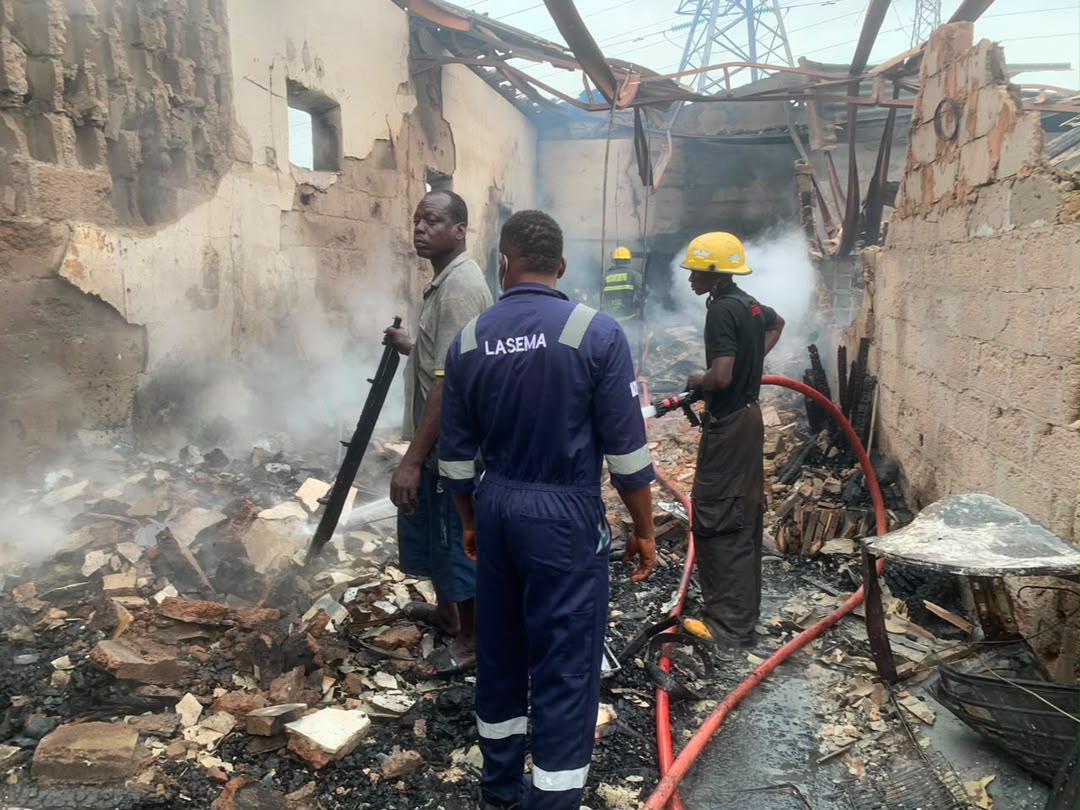
“Again, in the early hours of Monday, September 14th, the LRT Lion Squad, in conjunction with the Lagos State Fire and Rescue Service, Imota, responded to a fire outbreak at Adamo Bus Stop, Ikorodu. Preliminary findings revealed that the fire originated from a spark from electrical wiring, which ignited the roof of a hairdressing shop and spread to adjoining shops.
“The inferno affected three shops and destroyed goods and properties worth millions of naira. Fortunately, no loss of life or injury was recorded. The fire was swiftly brought under control and completely extinguished, while dampening-down operations were carried out to prevent re-ignition,” LASEMA PS said.
At 6:09 a.m. on Monday, it was gathered that the Alpha Eagle Team was also deployed to Ilupeju Road inward Cappa in response to a tanker breakdown. An empty tanker with an unknown registration number had developed a mechanical fault and obstructed vehicular movement. With support from the Nigeria Police and the Agency’s Super Metro recovery equipment, the tanker was successfully evacuated to a nearby layby, and normal traffic flow was restored.
In another development on Monday morning, the LRT Cobra Team, alongside the Lagos State Fire and Rescue Service, LASEMA Paramedics, the Nigeria Police, and the Lagos Neighbourhood Safety Corps, responded to a fire incident at 19, Olatunde Onimole Street, by Bakery Bus Stop, Surulere.
Two shops dealing in furniture and provisions were engulfed by fire. “The cause of the outbreak could not be immediately ascertained. The joint operation successfully brought the fire under control. Both shops were completely razed with all goods destroyed. No casualty or injury was recorded. Dampening-down operations were ongoing at the time of this report to forestall any resurgence,” LASEMA PS said.
Oke-Osanyintolu commended the professionalism, speed and synergy displayed by all responders including LASTMA, LASAMBUS, the Lagos State Fire and Rescue Service, the Nigeria Police, and the Lagos Neighbourhood Safety Corps.
He reiterated the commitment of the Lagos State Government to protecting lives and property through continuous investment in personnel training, modern equipment, and the decentralisation of LASEMA Response Units to ensure a world-class emergency response time.
Oke-Osanyintolu also urged members of the public to prioritise vehicle maintenance, adhere strictly to electrical safety standards, and report any emergency promptly to LASEMA through the 767 and 112 toll-free emergency lines.


LASEMA averts disaster as tanker loaded with 45,000 litres of PMS crashes

Five vehicle crash on Otedola Bridge

LASEMA tackles multiple emergencies across Lagos
-

 Fashion9 years ago
These ’90s fashion trends are making a comeback in 2017
-
Entertainment9 years ago
The final 6 ‘Game of Thrones’ episodes might feel like a full season
-
Business9 years ago
3 Ways to make your business presentation more relatable
-
Business9 years ago
The 9 worst mistakes you can ever make at work
-
Fashion9 years ago
According to Dior Couture, this taboo fashion accessory is back
-
Sports9 years ago
Steph Curry finally got the contract he deserves from the Warriors
-
Fashion9 years ago
Model Jocelyn Chew’s Instagram is the best vacation you’ve ever had
-
Sports9 years ago
Phillies’ Aaron Altherr makes mind-boggling barehanded play