
News
Presidential candidate identifies Nigeria’s real problems

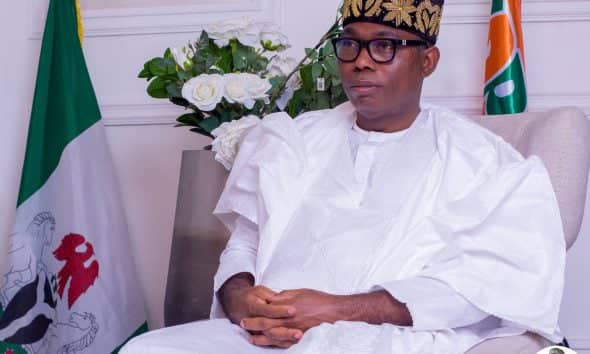
Presidential candidate of the Social Democratic Party (SDP) in the 2027 general elections, Prince Adewole Adebayo, has said that Nigeria’s crisis is rooted largely in bad governance, weak institutions and a political class more interested in winning elections than solving the country’s problems.
Adebayo disclosed this during the Nigerian Bar Association (NBA) conference in Port Harcourt, Rivers State.
Adebayo, who was among the presidential candidates invited to the NBA conference to present their visions for governing Nigeria, said Nigerians were less concerned about the political fortunes of individual politicians than about having a government that would improve their lives.
He said the repeated elections since 1999 had failed to produce the fundamental changes Nigerians expected, arguing that the country needed a new political direction anchored on the Constitution and its fundamental objectives.
According to him, the SDP had rejected the traditional politics of ethnic and religious rotation, money and political calculations, insisting that competence and commitment to the Nigerian people should determine who governs the country.
Adebayo said his party had previously engaged some “professional politicians” who sought to form a coalition with the SDP, but that the discussions exposed fundamental differences in political philosophy.
“We discovered three things. One, that they don’t care about ideology; they just want to win and figure it out later,” he said.
He explained that the SDP’s commitment was fundamentally tied to Chapter Two of the Nigerian Constitution, particularly its Fundamental Objectives and Directive Principles of State Policy.
Adebayo said anyone seeking political office under the SDP must subscribe to those principles, adding that the party would not rotate political power on the basis of ethnicity or religion.
“We do not rotate power based on ethnicity and religion. We do it based on your understanding of the needs of the country,” he said.
He also rejected the influence of money in determining political leadership, saying the SDP would rather build a coalition with ordinary Nigerians.
According to him, politicians would only be welcomed into such a coalition if they were prepared to subscribe to the Constitution and the ethical principles of the party.
On the contentious issue of fuel subsidy, Adebayo said the country should stop dwelling on whether subsidy should be removed, arguing that what Nigerians needed was a sustainable supply of petroleum products at affordable prices and a stable exchange rate.
He recalled that the SDP had warned against the removal of subsidy and predicted the hardship that would follow.
Adebayo said the current situation had validated the party’s position, arguing that the subsidy debate had become largely academic because the policy had already been dismantled.
He likened the situation to a medical patient whose appendix had already been removed, saying it would be impossible to simply reverse the procedure.
“Subsidy is like giving somebody a scholarship to a university that does not exist. The scholarship is useless,” he said.
He maintained that the real challenge was reducing energy costs through sustainable measures rather than returning to the old subsidy regime.
On insecurity, the SDP candidate launched one of his strongest attacks on the political establishment, arguing that Nigeria’s security crisis could not be solved without confronting the political and economic interests allegedly sustaining it.
He said the country’s security expenditure had failed to translate into genuine security for citizens, insisting that security allocations should be examined alongside the broader structure of governance and accountability.
“The theme of our own campaign is ‘Farewell to Poverty and Insecurity’, and they are linked,” he said.
Adebayo alleged that elements within the political establishment and their collaborators benefit from insecurity, particularly kidnapping and illegal mining, and argued that Nigerians would continue to suffer if they repeatedly returned the same politicians to power.
He said the solution required confronting the networks benefiting from violence, illegal mining and insecurity rather than merely increasing security spending.
“If you remove these politicians, who you keep re-electing, they will go away, and their terrorist partners will go away. If you keep re-electing them, the terrorists will continue because they and the terrorists are in partnership,” he alleged.
He also criticised what he described as the excessive use of security spending without adequate accountability, arguing that past administrations had left behind huge financial liabilities.
Addressing the persistent farmer-herder conflict, Adebayo rejected what he described as a simplistic portrayal of the crisis as a clash between farmers and herders.
“I am a herder myself. I have close to one million cattle, and I’ve not killed anybody before,” he said.
He argued that the government should focus on identifying the real beneficiaries of violence and illegal exploitation of Nigeria’s natural resources.
Adebayo proposed stronger regulation of the mining sector, arguing that miners should be properly identified and held responsible for criminal activities occurring within territories where they operate.
He also called for reforms to the Office of the National Security Adviser and a fundamental reorganisation of the armed forces.
According to him, Nigeria needs a “people’s army” that is structured to respond effectively to threats confronting communities across the country.
He criticised what he described as the creation of military divisions without sufficient manpower, arguing that the country needed properly equipped and adequately staffed formations rather than administrative changes that do not translate into operational strength.
On state police, Adebayo said the issue should be approached as a constitutional and governance matter rather than a political slogan.
He argued that since state governments possess legislative powers to make laws, they should also have the capacity to establish law-enforcement mechanisms capable of enforcing those laws.
“If you come to Rivers State and kill somebody, it’s against the law for Rivers State to kill somebody in Rivers State. Rivers State should not need Abuja to help them apprehend you,” he argued.
Adebayo maintained that every tier of government should have the capacity to enforce laws within its constitutional jurisdiction, saying state policing would strengthen local accountability and responsiveness.
The SDP candidate also presented his “Farewell to Poverty and Insecurity” campaign theme as a broader promise to tackle Nigeria’s economic and security challenges simultaneously.
He said poverty and insecurity were interconnected and could not be effectively addressed without reforming the way government operates.
Adebayo further claimed that Nigeria had not experienced a government since 1999 that sufficiently reflected the governing principles contained in the Constitution.
“We don’t have a government. Not only the one who is there now, President Tinubu. Since 1999, we have not had a government close to what we wrote in the Constitution,” he said.
He identified three principles which, according to him, should be non-negotiable regardless of differences among political parties: democratic elections as the means of forming government, governance according to law and approved appropriations, and accountability with a firm rejection of corruption.
Addressing food insecurity, Adebayo said Nigeria must move away from excessive dependence on imports and develop its agricultural production capacity.
He described himself as a net producer and exporter of agricultural products, citing his investments in farming and cattle production as evidence of his understanding of the agricultural sector.
He argued that food security could not be achieved through rhetoric or imports alone, but through deliberate investment in agriculture and productive capacity.
Adebayo challenged political leaders to demonstrate practical commitment to agriculture rather than merely making promises about food security.
He urged Nigerians to scrutinise the programmes and records of political parties and candidates before voting in 2027, saying the country’s future depended ultimately on the quality of choices made by the electorate.
“Your choice is to vote for candidates and parties according to what they present to you,” he said.

Igbokoda crash: Olugbo mourns victims, consoles Tinubu, Air Forc
The Olugbo of Ugboland, His Imperial Majesty, Oba Frederick Obateru Akinruntan, has condoled with President Bola Tinubu, the Air Force, and the families of those who lost their loved ones to the recent Nigerian Air Force (ANAF) ATR-42 crash.
Speaking during an assessment visit to the crash site, the Ondo State Commissioner of Police, Felix Ohuagwu, confirmed that there were no survivors from the impact.
“Officers of the State Marine Police, in active collaboration with the Nigerian Navy and local volunteers, have been working tirelessly in the swampy conditions to recover the remains of the victims and salvage the aircraft wreckage,” CP Ohuagwu stated.
Reacting to the disaster, Oba Akinruntan expressed deep sorrow over the tragedy occurring within his domain.
The revered monarch, through his spokesperson, Dr Ademibo Akingboye, extended his heartfelt condolences to the leadership of the Nigerian Air Force, the Federal Government and the grieving families of the fallen heroes.
Oba Akinruntan prayed for the repose of the souls of the departed officers and urged the nation to rally around bereaved families during this painful period.
Meanwhile, President Bola Ahmed Tinubu has expressed profound sadness over the tragic loss of military personnel, declaring three days of national mourning in honour of the deceased. The President has also ordered an immediate, full-scale investigation into the circumstances surrounding the crash.
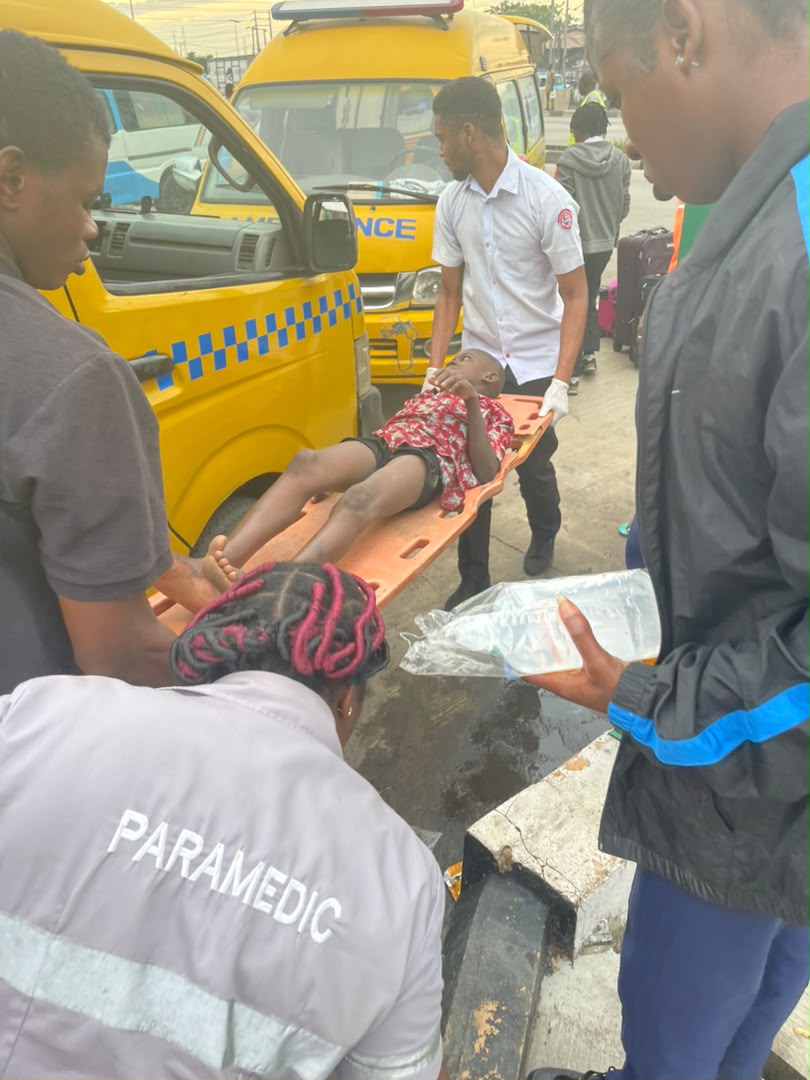
The Lagos State Emergency Management Agency (LASEMA) on Wednesday restored normalcy to Lagos roads after two separate accidents, one involving a teenager.
In a press statement signed by the agency’s Permanent Secretary, Dr Olufemi Damilola Oke-Osanyintolu, the first incident occurred at 5:10 am opposite the National Orthopaedic Hospital at Onipanu, inward Fadeyi, Lagos.
The agency swiftly deployed its team to the scene.
“Upon arrival, we discovered a road crash involving a HOWO truck with registration number T-36016LA and a black Toyota Camry with registration number FST-970KS, ” Oke-Osanyintolu disclosed.
A preliminary investigation revealed that reckless driving and overspeeding by the truck driver were responsible for the accident.
It was gathered that the Cobra Team of LASEMA, working collaboratively with officers of the Nigeria Police Force and LASTMA officials, promptly diverted traffic to forestall secondary crashes while undertaking recovery operations.
No life was lost. The affected Camry was evacuated and towed with the Agency’s light tow truck to Onipanu Police Station, while the truck was also driven to the station.
In the second incident recorded at 4:30 pm along the Onipanu BRT corridor inward Fadeyi, the Cobra Team responded within two minutes, arriving at 4:32 pm to find a teenage boy who had been hit by a vehicle while crossing the expressway and was in urgent need of medical attention, having sustained head and leg injuries in a hit-and-run.
The PS disclosed that the LASEMA team provided immediate assistance and ensured the swift transportation of the victim to the Trauma Centre for definitive medical care.
“Government reiterates its appeal to motorists to desist from reckless driving and overspeeding and to obey all traffic rules, while pedestrians are strongly advised to make use of provided pedestrian bridges and designated crossing points to avoid preventable tragedies.
“The protection of lives and property remains the top priority of the administration, and the state will continue to strengthen its emergency response architecture for the benefit of all Lagosians, ‘ Oke-Osanyintolu concluded.

The Lagos State Emergency Management Agency (LASEMA) successfully responded to a series of emergencies between Friday, September 25, and Sunday, September 27, 2026.
According to a statement signed by the Permanent Secretary of the agency, Dr Olufemi Damilola Oke-Osanyintolu, in the early hours of Friday, 25th September, following a distress call at 8:41am, the Alpha Eagle Team stationed at Cappa was immediately deployed to Palm Avenue Bus Stop, inward Oye, where a truck conveying a 40ft container had suffered a mechanical fault and become immobile, obstructing vehicular movement.
“The agency successfully recovered the broken-down truck off the road and safely parked it at a nearby layby, thereby restoring free flow of traffic,” Oke-Osanyintolu said.
That same evening, following a call received at 7:24pm, the Alpha Eagle Team was again deployed to Ojuwoye Bus Stop, inward Oshodi, where another containerised truck had suffered an electrical fault.
“The response team secured the scene, managed traffic effectively, and with the aid of the Super Metro, the truck was recovered and moved to a safe location, ensuring unhindered vehicular movement along the corridor.
“On Saturday, 26th September, the Agency responded to a serious Road Traffic Accident at Otedola, Mobil inward Berger, involving a Ford Escape SUV and a moving truck. Upon arrival at the scene at about 6:07am, the Tiger Squad from C3 discovered that the SUV had rammed into the truck from behind, resulting in injuries to an adult male driver and a female adult passenger. The Agency’s Paramedics, in collaboration with LASAMBUS, promptly administered first aid and provided immediate pre-hospital care before transporting the casualties to the Trauma Centre for further medical treatment. The Lagos State Fire and Rescue Service, LASTMA and the Nigeria Police Force were also present at the scene to ensure effective incident management. Both the affected truck and the SUV were thereafter moved to Isheri Police Station for further necessary action,” the PS said.
The Agency also successfully managed a truck breakdown at Olorunshogo Bus Stop, inward Cappa, on Friday evening, where a containerised truck became immobile due to a mechanical fault.
The vehicle was recovered with the aid of the Super Metro and relocated to a layby, while another breakdown involving a truck conveying interlocks at Ojuwoye was similarly recovered in the early hours of Sunday, 27th September, ensuring that all affected roads were cleared and reopened for public use.
The agency also responded to a fire outbreak at Bakare Street, Ojodu Berger, on Sunday afternoon.
Three out of eight shops stocked with foodstuffs and frozen foods had been engulfed by fire allegedly caused by an electrical surge following power restoration.
“The swift and professional intervention of the Tiger Squad and the Lagos State Fire and Rescue Service successfully contained the inferno, prevented it from spreading to other shops, and completely extinguished the fire. Fortunately, no loss of life was recorded,” disclosed the PS.
Also on Sunday, the Agency responded to a containerised truck incident at Shoprite, Inward Governor’s Road, where a 40ft loaded container detached from the turntable of a Sinotruk head and fell with its flatbed, fully obstructing a lane. The response team immediately secured the scene and implemented traffic management measures. Through a well-coordinated multi-agency effort involving the Agency’s Lowbed, a private tow truck, an empty Sinotruk for transloading and a private forklift, the Peak Milk products contained therein were successfully transloaded, the affected truck head was towed to the LASTMA yard, and the flatbed was uprighted and recovered to a nearby layby. The roadway was subsequently cleared and reopened for vehicular movement.
The Agency’s heavy-duty equipment, Hiab, was also deployed to Fagba Bus Stop, inward Iju, on Saturday evening to provide technical support for the safe hanging of a billboard, which was completed.
“All operations have been concluded, affected roadways have been restored, and response teams have returned to base in good condition.
“The Lagos State Government under the leadership of Mr Babajide Olusola Sanwo-Olu remains resolute in ensuring a safe and secure environment for all residents. The Agency reassures Lagosians of its continued readiness for prompt and professional emergency response at all times and urges all road users to adhere to safety regulations, ensure proper maintenance of vehicles and exercise caution while driving,” Oke-Osanyintolu concluded.


Igbokoda crash: Olugbo mourns victims, consoles Tinubu, Air Force

Accident: Normalcy returns to Lagos roads as LASEMA rescues hit-and-run victim

LASEMA responds to multiple emergencies
-

 Fashion9 years ago
These ’90s fashion trends are making a comeback in 2017
-
Entertainment9 years ago
The final 6 ‘Game of Thrones’ episodes might feel like a full season
-
Business9 years ago
3 Ways to make your business presentation more relatable
-
Business9 years ago
The 9 worst mistakes you can ever make at work
-
Fashion9 years ago
According to Dior Couture, this taboo fashion accessory is back
-
Sports9 years ago
Steph Curry finally got the contract he deserves from the Warriors
-
Sports9 years ago
Phillies’ Aaron Altherr makes mind-boggling barehanded play
-
Fashion9 years ago
Model Jocelyn Chew’s Instagram is the best vacation you’ve ever had