
Politics
Some California incumbents lagging in fundraising: report
At vero eos et accusamus et iusto odio dignissimos ducimus qui blanditiis praesentium voluptatum deleniti atque corrupti.


Neque porro quisquam est, qui dolorem ipsum quia dolor sit amet, consectetur, adipisci velit, sed quia non numquam eius modi tempora incidunt ut labore et dolore magnam aliquam quaerat voluptatem. Ut enim ad minima veniam, quis nostrum exercitationem ullam corporis suscipit laboriosam, nisi ut aliquid ex ea commodi consequatur.
At vero eos et accusamus et iusto odio dignissimos ducimus qui blanditiis praesentium voluptatum deleniti atque corrupti quos dolores et quas molestias excepturi sint occaecati cupiditate non provident, similique sunt in culpa qui officia deserunt mollitia animi, id est laborum et dolorum fuga.
Quis autem vel eum iure reprehenderit qui in ea voluptate velit esse quam nihil molestiae consequatur, vel illum qui dolorem eum fugiat quo voluptas nulla pariatur.
Temporibus autem quibusdam et aut officiis debitis aut rerum necessitatibus saepe eveniet ut et voluptates repudiandae sint et molestiae non recusandae. Itaque earum rerum hic tenetur a sapiente delectus, ut aut reiciendis voluptatibus maiores alias consequatur aut perferendis doloribus asperiores repellat.
Lorem ipsum dolor sit amet, consectetur adipisicing elit, sed do eiusmod tempor incididunt ut labore et dolore magna aliqua. Ut enim ad minim veniam, quis nostrud exercitation ullamco laboris nisi ut aliquip ex ea commodo consequat.
“Duis aute irure dolor in reprehenderit in voluptate velit esse cillum dolore eu fugiat”
Nemo enim ipsam voluptatem quia voluptas sit aspernatur aut odit aut fugit, sed quia consequuntur magni dolores eos qui ratione voluptatem sequi nesciunt.
Et harum quidem rerum facilis est et expedita distinctio. Nam libero tempore, cum soluta nobis est eligendi optio cumque nihil impedit quo minus id quod maxime placeat facere possimus, omnis voluptas assumenda est, omnis dolor repellendus.
Nulla pariatur. Excepteur sint occaecat cupidatat non proident, sunt in culpa qui officia deserunt mollit anim id est laborum.
Sed ut perspiciatis unde omnis iste natus error sit voluptatem accusantium doloremque laudantium, totam rem aperiam, eaque ipsa quae ab illo inventore veritatis et quasi architecto beatae vitae dicta sunt explicabo.

Former Majority Leader of the House of Representatives, Hon. Mulikat Adeola Akande, has urged Nigerians to rally behind the presidential candidate of the Social Democratic Party (SDP), Prince Adewole Adebayo, saying the country cannot afford to miss what she described as an opportunity for genuine change in 2027.
Akande spoke at the public presentation of Adebayo’s book, Farewell to Poverty and Insecurity: Governance and Accelerated Development — Blueprint of a New Nigeria, 2027–2031, where she expressed strong confidence in the SDP candidate’s capacity to transform the country.
The former federal lawmaker challenged Nigerians who continue to dismiss the SDP as a small political party, arguing that the size of a political platform should not determine the quality of leadership it can produce.
According to her, Adebayo has presented himself and his policies to Nigerians and has demonstrated a willingness to devote himself fully to changing the country.
“Each time I hear the presidential candidate speak in public, I just pity Nigerians because it is so easy to see someone who can take you to the promised land,” Akande said.
She urged Nigerians not to let the SDP’s relatively small political structure discourage them from considering Adebayo for the presidency.
“People believe, ‘Oh, SDP is a small party. We don’t know. They only want to align with the big parties,’” she said, insisting that Nigerians should instead focus on the candidate and what he has offered to the country.
Akande said the responsibility for determining Nigeria’s future ultimately rests with citizens, warning that future generations would hold Nigerians accountable for the decisions they make at the 2027 election.
“The earlier we begin to think in the right direction, the better,” she said. “He has offered himself. He has offered everything that he has to ensure that this country changes.”
She questioned why Nigerians would continue to support political actors they believe are responsible for the country’s current challenges while ignoring an alternative that has presented itself before them.
“Do we like what is going wrong right now? And you know the people who are causing this, and you are still standing by them. What else do you want?” she asked.
The former Majority Leader also dismissed concerns that Adebayo’s promises could amount to the same political rhetoric Nigerians have heard from politicians in the past.
She argued that the SDP candidate had gone beyond merely making political statements by outlining his policies and what he intends to accomplish if elected.
“He has told you his policies. He has told you what he can do,” she said.
Akande also urged SDP supporters to take the party’s message beyond the gathering, calling on them to mobilise Nigerians ahead of the 2027 presidential election.
“Just like the Prophet Elbuba said, everybody go out there and get people to believe in what we are doing in the SDP,” she said.
Emphasising that the movement should not be reduced to the ambitions of individual politicians, Akande said the ultimate objective was to rescue the country from its current difficulties.
“It is not about me. It is not about him. It is about the country,” she declared.
She warned that Nigerians could regret failing to seize what she described as an opportunity for change in 2027.
“The earlier we catch on to this opportunity, the better for us,” Akande said, adding that Nigerians should carefully consider the consequences if the opportunity was missed after the 2027 election.
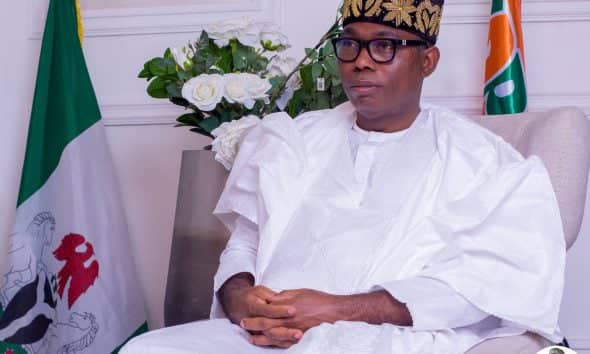
The presidential candidate of the Social Democratic Party (SDP), Prince Adewole Adebayo, has proposed a governance model that combines the vigour of private enterprise with an interventionist state focused on fulfilling citizens’ basic needs.
The proposal is outlined in his 2027–2031 governance blueprint, titled ‘Farewell to Poverty and Insecurity,’ which identifies social democracy and the basic needs approach as the core pillars of his proposed administration.
Rather than viewing economic growth as an end in itself, Adebayo’s blueprint contends that development must ultimately lead to a dignified and productive life for ordinary Nigerians.
Under this model, markets and private enterprise would remain vital drivers of innovation and economic growth, while government would intervene strategically where markets fall short, essential public goods are at risk, or national development calls for catalytic investment.
The blueprint lists security, food, clean water, affordable energy, healthcare, education, housing, decent work, mobility, justice, environmental quality, and digital connectivity as interconnected foundations of national productivity and citizenship.
This approach marks a substantial shift from measuring national progress solely through GDP figures, government revenue, or infrastructure projects.
In ‘Farewell to Poverty and Insecurity,’ Adebayo argues that the true measure of governance is whether Nigerians see tangible improvements in their everyday lives.
The philosophy also forms part of the broader argument in the blueprint that Nigeria needs both a capable state and a productive private sector.
Its executive message dismisses what it describes as a false dichotomy between an active state and a thriving market, asserting that Nigeria requires a public authority capable of guaranteeing essential public goods alongside a competitive private economy capable of investing, producing, and creating jobs.
For Adebayo, therefore, social democracy is not a rejection of capitalism or private enterprise. Instead, it is a framework through which economic activity is expected to serve larger social goals.
The core proposition of the blueprint is that prosperity must be linked to human welfare—and that government should be judged by whether citizens can genuinely feel the benefits of national development.
This philosophy permeates the document’s proposals on security, agriculture, employment, education, healthcare, housing, infrastructure, and social protection.
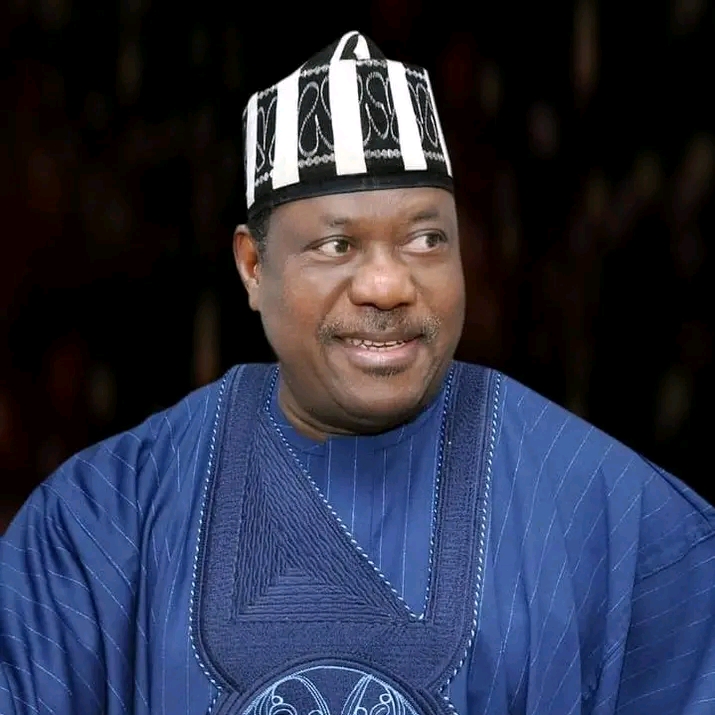
All North Central For Asiwaju 2027, a political group of indigenes and non-indigenes resident in the North Central region of Nigeria has unanimously decried the exclusion of the name of the Father and Leader of North Central George Akume from the PPC list recently published by the APC for its Presidential campaign.
The group stated unequivocally that the error of omitting the name of the Secretary to the Government of the Federation from the list will be inimical to the success of President Bola Ahmed Tinubu in the North Central in the 2027 Presidential election.
In a statement jointly signed by the Convener/ Director General of the group Chief Ewie Aimienwauu, the National Coordinator, Honorable Marcellinus Ozoemena Njoku and all the State Coordinators, the group humbly appealed to the President to “withdraw the PPC list and correct this error amongst many others which are not of particular interest to our association exclusively.”
The statement noted that the SGF as the engine room of the Tinubu administration offers a credible and informed view of the government’s success so far, a quality which is germane for issue based campaign as being requested by Mr. President.
It further said that the “pivotal role of the Leader on the North Central brokering peace, being an accessible father of all, a rallying point and stabiliser puts him at the front lines of getting the Middle Belt people to support the re-election bid of Mr. President.
“The President has done extremely well, but we need several gentle, confident, publicly loved, and informed voices to take the message to the people. The SGF is this kind of person, dependable forthright, loved, accessible, approachable, caring, and above all, a great apostle of the re-election of President Bola Ahmed.
“Without being an alarmist, we all remember how the Muslim-Muslim ticket and the insurgency fared at the 2023 polls in the North Central Zone. That unpleasant situation must be prevented in 2027. This can only sincerely be mitigated in 2027 with our father and Leader of the North Central assuring the people and pointing out personally, how much more the Zone has fared under President Bola Ahmed Tinubu.
“All hands must be on deck to campaign, mobilise, and ensure victory for our hardworking President and our great party come 2027.”


Igbokoda crash: Olugbo mourns victims, consoles Tinubu, Air Force

Accident: Normalcy returns to Lagos roads as LASEMA rescues hit-and-run victim

LASEMA responds to multiple emergencies
-

 Fashion9 years ago
These ’90s fashion trends are making a comeback in 2017
-
Entertainment9 years ago
The final 6 ‘Game of Thrones’ episodes might feel like a full season
-
Business9 years ago
The 9 worst mistakes you can ever make at work
-
Business9 years ago
3 Ways to make your business presentation more relatable
-
Fashion9 years ago
According to Dior Couture, this taboo fashion accessory is back
-
Sports9 years ago
Steph Curry finally got the contract he deserves from the Warriors
-
Fashion9 years ago
Model Jocelyn Chew’s Instagram is the best vacation you’ve ever had
-
Sports9 years ago
Phillies’ Aaron Altherr makes mind-boggling barehanded play