
Business
15 Habits that could be hurting your business relationships
Et harum quidem rerum facilis est et expedita distinctio. Nam libero tempore, cum soluta nobis est eligendi.


Nemo enim ipsam voluptatem quia voluptas sit aspernatur aut odit aut fugit, sed quia consequuntur magni dolores eos qui ratione voluptatem sequi nesciunt.
Et harum quidem rerum facilis est et expedita distinctio. Nam libero tempore, cum soluta nobis est eligendi optio cumque nihil impedit quo minus id quod maxime placeat facere possimus, omnis voluptas assumenda est, omnis dolor repellendus.
Nulla pariatur. Excepteur sint occaecat cupidatat non proident, sunt in culpa qui officia deserunt mollit anim id est laborum.
Sed ut perspiciatis unde omnis iste natus error sit voluptatem accusantium doloremque laudantium, totam rem aperiam, eaque ipsa quae ab illo inventore veritatis et quasi architecto beatae vitae dicta sunt explicabo.
“Duis aute irure dolor in reprehenderit in voluptate velit esse cillum dolore eu fugiat”
Neque porro quisquam est, qui dolorem ipsum quia dolor sit amet, consectetur, adipisci velit, sed quia non numquam eius modi tempora incidunt ut labore et dolore magnam aliquam quaerat voluptatem. Ut enim ad minima veniam, quis nostrum exercitationem ullam corporis suscipit laboriosam, nisi ut aliquid ex ea commodi consequatur.
At vero eos et accusamus et iusto odio dignissimos ducimus qui blanditiis praesentium voluptatum deleniti atque corrupti quos dolores et quas molestias excepturi sint occaecati cupiditate non provident, similique sunt in culpa qui officia deserunt mollitia animi, id est laborum et dolorum fuga.
Quis autem vel eum iure reprehenderit qui in ea voluptate velit esse quam nihil molestiae consequatur, vel illum qui dolorem eum fugiat quo voluptas nulla pariatur.
Temporibus autem quibusdam et aut officiis debitis aut rerum necessitatibus saepe eveniet ut et voluptates repudiandae sint et molestiae non recusandae. Itaque earum rerum hic tenetur a sapiente delectus, ut aut reiciendis voluptatibus maiores alias consequatur aut perferendis doloribus asperiores repellat.
Lorem ipsum dolor sit amet, consectetur adipisicing elit, sed do eiusmod tempor incididunt ut labore et dolore magna aliqua. Ut enim ad minim veniam, quis nostrud exercitation ullamco laboris nisi ut aliquip ex ea commodo consequat.
Nestlé Nigeria has rewarded smallholder farmers with premium payments for adopting regenerative agricultural practices as stakeholders commemorated the 2026 International Day of Desertification and Drought in Zaria, Kaduna State.
The event, organised by TechnoServe Nigeria with support from the Alliance for a Green Revolution in Africa (AGRA) and Nestlé Nigeria, recognised farmers championing land restoration and climate resilience through the Strengthening Farmers and SMEs Resilience through Climate-Smart Grain Production (STreFaS) project.
Held under the theme, “Restoring Land. Rewarding Farmers. Building Resilience,” the programme brought together government officials, development partners, agricultural experts, agribusinesses and farmers to explore practical solutions to land degradation and promote sustainable food production.
As part of the event, farmers from Kaduna and Nasarawa states who successfully implemented regenerative agricultural practices during the 2025 farming season received financial incentives from Nestlé Nigeria.
According to the organisers, the premium payments are designed to encourage the adoption of sustainable farming methods that improve soil health, boost agricultural productivity and strengthen farmers’ resilience to the effects of climate change, including drought, erratic rainfall and declining soil fertility.
The three-year STreFaS project has supported thousands of smallholder farmers and agribusinesses in adopting climate-smart farming techniques such as minimum tillage, cover cropping, agroforestry, mulching, integrated pest management, soil testing and water conservation.
The organisers noted that the initiative is helping to restore degraded land while improving crop yields, enhancing food security and strengthening the livelihoods of farming communities.
Speaking at the event, the Country Director of TechnoServe Nigeria, Mrs Adesuwa Akinboro, represented by the Director of Programmes, Mr Shadrack Gusuu, said healthy soils remain the foundation of food security and sustainable agriculture.
He said, “The International Day of Desertification and Drought reminds us that healthy soils are essential for food security, resilient livelihoods, and sustainable agricultural development. Through the STreFaS project, we are equipping farmers with practical regenerative agriculture solutions that improve productivity while restoring the natural resources on which farming depends.”
Representing Nestlé Nigeria, Mr Alidu Amadu reaffirmed the company’s commitment to building sustainable food systems through regenerative agriculture.
According to him, “Farmers are at the heart of this transformation. Through the premium payment initiative, we are recognising and rewarding farmers who are taking deliberate steps to improve soil health, restore degraded land, and strengthen the resilience of their farms.”
Also speaking, Dr Esther Ibrahim of AGRA called for stronger collaboration to address land degradation through farmer-focused interventions.
She said climate-smart agriculture has proven to be an effective approach to improving farm productivity while restoring the environment, adding that sustained investment and collective action remain critical to achieving lasting results.
The event highlighted the growing importance of regenerative agriculture as a sustainable solution for combating desertification, improving climate resilience, and securing the future of smallholder farming in Nigeria.
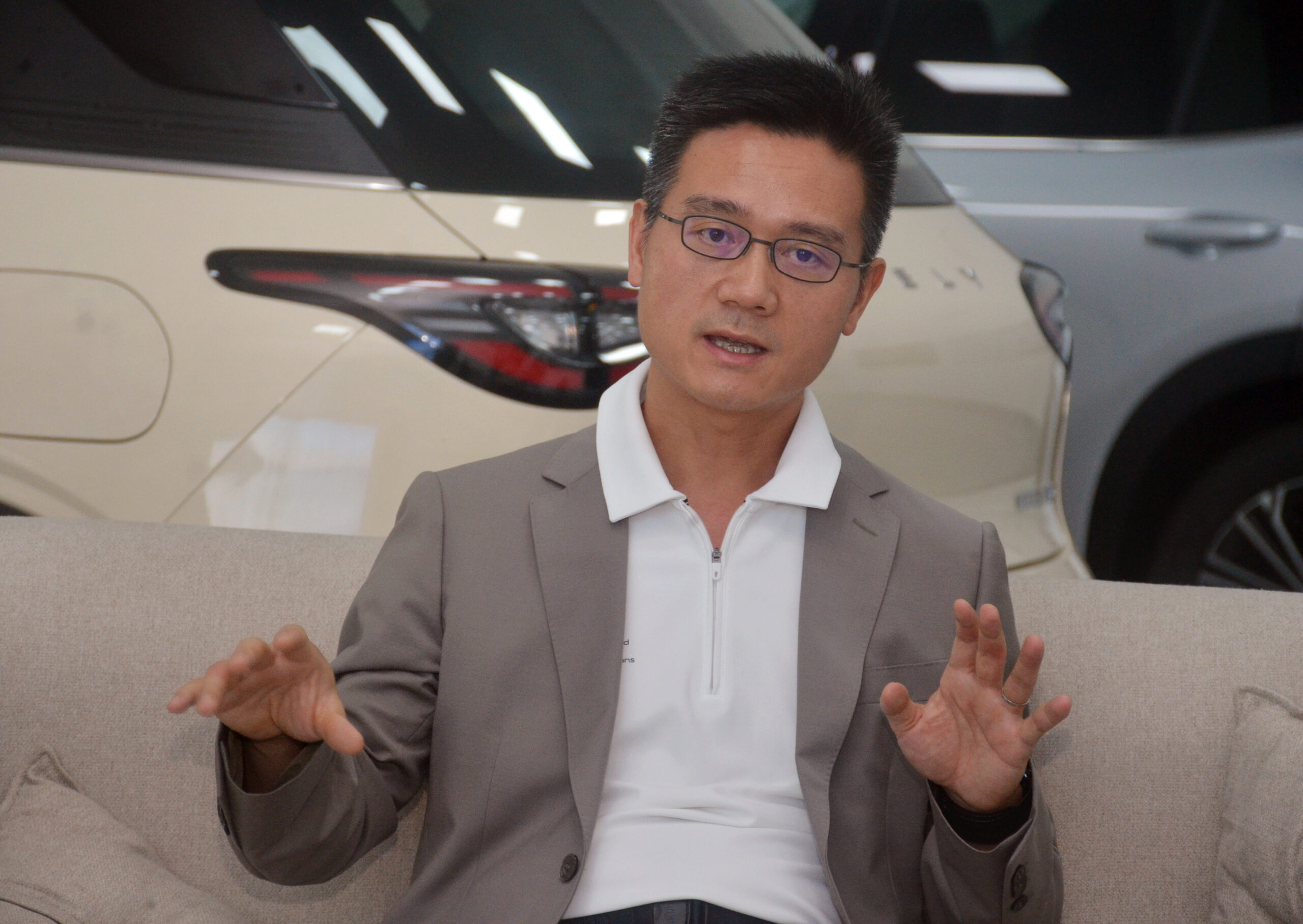
The Chief Executive Officer of Tim Motors, Mr Leon Zhan, has expressed optimism about the future of new energy vehicles in Nigeria, saying their acquisition and use will increase significantly in the coming years in line with global trends.
Speaking during an interactive session with journalists in Lagos on Friday, Zhan identified high acquisition costs and inadequate infrastructure as major challenges facing prospective buyers of electric and other new energy vehicles in the country.
Despite these constraints, he said ongoing improvements in the economy and rising purchasing power among Nigerians would help address the obstacles and accelerate the adoption of cleaner transportation technologies.
According to him, Nigeria’s relatively low electric vehicle penetration presents a significant opportunity for investors seeking to tap into the growing market for sustainable mobility solutions.
Zhan noted that increasing concerns over rising fuel prices could further drive interest in electric vehicles, making the sector an attractive area for future investment and expansion.
He expressed confidence that as awareness grows and supporting infrastructure improves, Nigeria will witness increased demand for new energy vehicles across various segments of the transportation industry.
“If you are deciding on an investment, you have to see the trend and space to grow. This is very important. Currently, electric vehicles have just about one or two per cent penetration in this market. In other markets like China, the penetration is about 70 per cent. So, if you look at the trend, you see the potential for growth in Nigeria,” he stated.
The CEO added that Chinese car companies are investing in Nigeria due to the size of the market, and they will be increasingly affordable.
He said: “Your country, Nigeria, is growing. So your purchasing power is also growing, and so, I’m sure years later, more and more people can afford Chinese cars with better and better prices.”
Tim Motors, he stated, would establish stations in several cities across the country to provide after-sales support for electric vehicles. This follows its recent introduction of Geely Galaxy new energy vehicles into Nigeria, under a sole distributorship arrangement with Geely Auto, one of China’s major forces in the country’s transition to new-energy mobility.
He also revealed that the company has put infrastructure in place in Abeokuta to facilitate local vehicle assembly in the country.
According to him, the decision by the company to introduce electric vehicles has been properly thought through, and it includes providing robust after-sales support to customers across the country.
He added that the company was aware of customers’ concerns about after-sales support, local availability of parts and access to power to charge their vehicles.
These issues, he explained, informed its decision to establish a special partnership arrangement to address customer issues and provide support centres across major cities in Nigeria.
“Many people ask how long and how far it is for them to get support if their EV cars have issues. This is why we have designed a system whereby we work with partners who will handle such. We have 10 already. We will have some in major cities like Abuja, Kano and Port-Harcourt in the coming months,” he said.
Zhan further revealed that Tim Motors has a plan whereby people who purchase their vehicles can easily get support within a five-kilometre radius of their residence or offices.
He added that the company has a professional team in China that is dedicated to sourcing and delivering parts for their vehicles in Nigeria.
He further revealed that more Geely Galaxy brands would be introduced in the coming months, stating that the EX2, EX5 and EX5 EM-I were just the first brands being brought into the market.
He added that the technology of Chinese electric vehicles was better than that of many other major auto manufacturers, and yet they are 20 to 30 per cent more affordable.
It will be recalled that Tim Motors recently introduced three Geely Galaxy models, the EX5 EM-i, the EX5, and the EX2, designed to meet diverse customer needs across the Nigerian market.
The EX5 EM- i is a smart family SUV that combines petrol and electric power for an extended driving range of more than 1000km, reduced fuel consumption, and lower emissions. For Nigerian families who want to spend less time at the fuel station and more time on the road, the EX5 EM-i delivers.
The EX5 is a value-focused mid-size SUV with a premium, tech-forward interior and over 430 km of driving range.
The EX2 is an all-electric subcompact hatchback built for the realities of city life. Affordable, intuitive to drive, and remarkably efficient, it is the answer for commuters tired of fuel queues and rising running costs.
Geely, which owns globally recognised brands including Volvo Cars, Polestar, and Lotus, has built a strong reputation for innovation, quality, and intelligent vehicle technologies across both New Energy Vehicle (NEV) and Internal Combustion Engine (ICE) markets. It ranks seventh globally by annual vehicle sales, with over 3.4 million units sold, placing it among the world’s most successful automotive manufacturers. Its footprint continues to grow across international markets.
Telecommunications company Globacom has enhanced its ‘Borrow Me Credit’ service, introducing new features aimed at ensuring subscribers remain connected even when they have insufficient airtime or data balance.
The company disclosed this in a statement issued in Lagos, noting that the eligibility requirements for the service have been simplified to enable millions of active prepaid customers to access instant airtime and data support when needed.
According to Globacom, the upgraded service now allows customers to borrow special data bundles as well as airtime and data on behalf of other subscribers. The new feature is designed to help users support friends and family members who may be unable to recharge immediately or are temporarily unreachable.
The company said the initiative reinforces its commitment to keeping customers connected during critical moments.
“Whether it is an urgent business call, a late-night research project, or staying in touch with loved ones during an emergency, Glo’s ‘Borrow Me Credit’ ensures that a low balance never results in a communication blackout,” the company stated.
Globacom clarified that while the service attracts a service charge, its primary objective is to provide immediate assistance to subscribers facing low or exhausted balances.
The telecom operator further stated that customers can access airtime and data loans ranging from N25 to N4,000, offering flexible options to meet varying communication needs.
It added that borrowing limits are determined by customers’ usage patterns and level of engagement on the network, with higher limits available to subscribers who maintain stronger usage profiles.
The enhanced service forms part of Globacom’s broader strategy to improve customer experience and expand access to digital communication solutions across the country.


Six die in separate Lagos accidents

Five killed in early morning crash

Boat mishap: SDP presidential candidate mourns, demands urgent action to end tragedies
-

 Fashion9 years ago
These ’90s fashion trends are making a comeback in 2017
-
Entertainment9 years ago
The final 6 ‘Game of Thrones’ episodes might feel like a full season
-
Fashion9 years ago
According to Dior Couture, this taboo fashion accessory is back
-
Business9 years ago
The 9 worst mistakes you can ever make at work
-
Sports9 years ago
Steph Curry finally got the contract he deserves from the Warriors
-
Sports9 years ago
Phillies’ Aaron Altherr makes mind-boggling barehanded play
-
Business9 years ago
Uber and Lyft are finally available in all of New York State
-
Entertainment9 years ago
The old and New Edition cast comes together to perform