
Worship
Genesis urges unity as Ramadan, Lent coincide


*Hails rescue of Oyo teachers, pupils
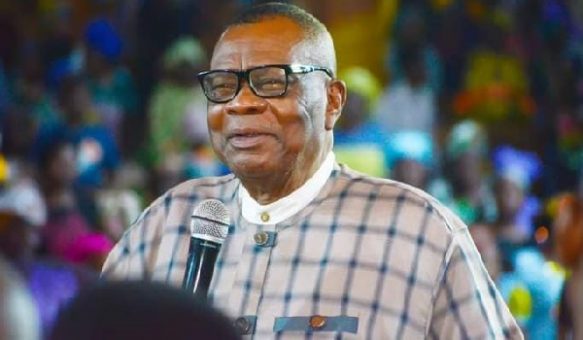
The Global Evangelist of the Christ Apostolic Church (CAC), Prophet Samuel Kayode Abiara, has called on President Bola Tinubu to prioritise the welfare of security personnel and the families of officers who die in the line of duty.
Abiara appealed while reacting to the successful rescue of teachers and pupils abducted in Oriire Local Government Area of Oyo State.
The cleric also commended President Tinubu, Oyo State Governor Seyi Makinde and the nation’s security agencies for securing the freedom of the victims, who spent 56 days in captivity before regaining their freedom through a coordinated security operation.
Speaking at a press briefing, Abiara expressed gratitude over the safe return of the teachers and pupils, describing the rescue as a testament to the commitment of the government and security agencies to combating insecurity.
He praised the administration of President Tinubu for sustaining efforts to tackle banditry, kidnapping and other violent crimes, while urging the Federal Government to further improve the welfare of members of the Nigerian Armed Forces and other security agencies.
According to him, better salaries, allowances and welfare packages would boost the morale of security personnel and enhance their effectiveness in protecting lives and property.
Abiara also appealed to the Federal Government to ensure adequate support for the families of security officers who lost their lives while serving the country.
“I appeal directly to President Bola Tinubu to take proper care of the families of security personnel who sacrificed their lives for the nation. Their spouses and children should not be abandoned. Our soldiers risk everything in defence of Nigeria, and their welfare must remain a top priority,” he said.
On the country’s security situation, the cleric urged Nigerians not to lose confidence in the current administration, stressing that insecurity is a global challenge and not peculiar to Nigeria.
He attributed the rise in violence and moral decadence across the world to biblical prophecies concerning the end times, citing the days of Noah and the destruction of Sodom and Gomorrah as examples of periods characterised by widespread wickedness.
Abiara noted that countries such as the United States, the United Kingdom and France had also faced serious security threats, including terrorism linked to groups such as ISIS and Al-Qaeda, but eventually made significant progress in addressing them.
He expressed optimism that Nigeria would overcome its security challenges through sustained efforts by the government and security agencies.
The cleric also urged Nigerians to remain hopeful and continue supporting initiatives aimed at restoring peace and security across the country.
He further commended the unity displayed by Nigerians during the Oriire abduction, noting that Christians, Muslims and traditional worshippers joined together in prayer for the safe return of the victims.
“It was not just one religion that prayed. Nigerians from different faiths and ethnic backgrounds joined together in prayer, and we thank God that the children have returned safely. Let us remain peaceful and hopeful. Nigeria will overcome this difficult period,” Abiara said.
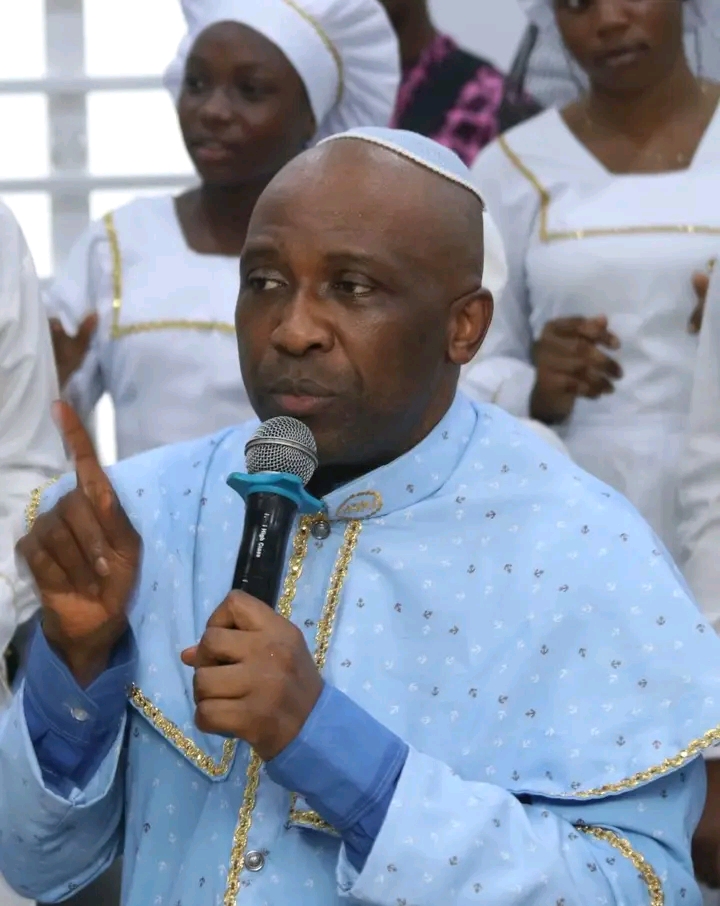
The Founder of the INRI Evangelical Spiritual Church, Prophet Elijah Ayodele, has insisted that he will not retract his prophecy concerning the Nigeria Democratic Congress (NDC) vice-presidential candidate, Senator Mohammed Musa Kwankwaso, despite the threat of legal action.
Kwankwaso had reportedly threatened to sue the cleric for N10 billion over remarks alleging that he would betray the party’s presidential candidate, Mr Peter Obi, ahead of the 2027 general election.
Ayodele had claimed that Kwankwaso’s political ambition could undermine Obi’s presidential bid and that the former Kano State governor would ultimately pursue his personal interests.
Responding to the legal threat, the cleric maintained that he stood by his prophecy, stressing that prophetic messages were open to different interpretations.
“I stand by my message. People are free to interpret prophetic statements differently, just as dreams may have various interpretations. If anyone believes that going to court is the proper course of action, that is their prerogative. For this prophecy, for anything that I said, I stand by it.”
The prophet stated further that while he was not sure where the prophecy would lead him, he explained that “One can only die once. Mind you that you may have the power to kill somebody; you can’t kill the soul. You can only kill the body. You are the one who wants to become president. I don’t want to become president. If you feel that taking me to court is the best, go ahead.
“If you feel that you don’t need it, so be it. N10 billion suit is not enough; let them put it to N10 trillion. That will make it fine. My duty is simply to declare what I believe God has revealed to me, and I remain steadfast in that responsibility.
On the purported rift with former Power Minister, Chief Adebayo Adelabu, he dismissed the insinuation, saying there was no dispute between the two of them.
Ayodele said Adelabu merely expressed his personal opinion.
“I have always regarded Chief Adelabu with affection and goodwill, and I still wish him success in his political aspirations. He is my son. His election as Governor of Oyo State is in my hands, ” he said.
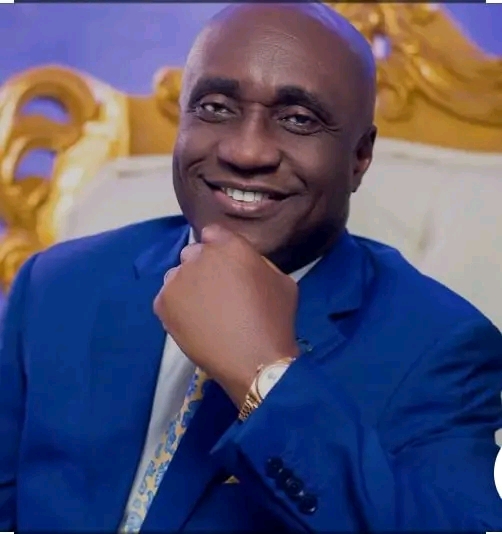
Comments credited to the founder and presiding pastor of Salvation Ministries, Pastor David Ibiyomie, have sparked widespread debate, with many Nigerians expressing divergent views over his reported assertion that those who are paid for rendering services in church would never come out of poverty.
Ibiyomie, whose church headquarters is located in the GRA area of Port Harcourt, Rivers State, was quoted as making the remark during a sermon.
The statement quickly gained traction on social media, attracting both criticism and support.
The cleric, who previously made headlines after stating that he gives offerings to God in foreign currencies, faced fresh backlash from some social media users over the latest comment.
A Facebook user, Udeme Amos, had asked, “Please, what about the contractor that built the church, or
The one that sold the instrument to the church?”
An instrumentalist in a Methodist Church, Basi Lebe Henry said, “Perspectively, while every minister of the Gospel is entitled to express personal convictions, biblical doctrine must always be interpreted within the full counsel of Scripture rather than through isolated assertions.
“The Scriptures consistently affirm that serving God is an act of worship, but they also uphold the principle that those who labour in ministry are worthy of material support.
“As the Apostle Paul declared, ‘The labourer deserves his wages’ (Luke 10:7), and again, ‘The Lord has commanded that those who preach the gospel should receive their living from the gospel’ (1 Corinthians 9:14). Likewise, 1 Timothy 5:18 reinforces this truth by stating, ‘The worker deserves his wages.”
“The determining factor is not whether one receives financial compensation, but the disposition of the heart.
“Scripture repeatedly warns against serving God for the love of money, yet it never teaches that receiving honourable remuneration for genuine service automatically obstructs divine blessing or guarantees poverty.
Throughout the Bible, God blessed individuals who faithfully served Him while also receiving material provision.
“Therefore, the true biblical emphasis is faithfulness, integrity, humility and a heart devoted to God’s glory rather than financial gain.
“May every believer who serves in the house of God do so with sincerity, excellence and reverence, remembering that both willing service and just compensation can coexist harmoniously under biblical principles.”
Nnudu Atochukuwu, who probably disagreed with the pastor, asked whether those who work on the altar do not eat from the altar, only GO is entitled?
However, one Moyor Otaru Chinaka, defending the man of God, said probably those commenting seemed not to understand what the pastor was saying.


Six die in separate Lagos accidents

Five killed in early morning crash

Boat mishap: SDP presidential candidate mourns, demands urgent action to end tragedies
-

 Fashion9 years ago
These ’90s fashion trends are making a comeback in 2017
-
Entertainment9 years ago
The final 6 ‘Game of Thrones’ episodes might feel like a full season
-
Fashion9 years ago
According to Dior Couture, this taboo fashion accessory is back
-
Business9 years ago
The 9 worst mistakes you can ever make at work
-
Sports9 years ago
Steph Curry finally got the contract he deserves from the Warriors
-
Sports9 years ago
Phillies’ Aaron Altherr makes mind-boggling barehanded play
-
Business9 years ago
Uber and Lyft are finally available in all of New York State
-
Entertainment9 years ago
The old and New Edition cast comes together to perform