
uncategorized
‘My transformation from OAU dropout to UNILAG First Class graduate’

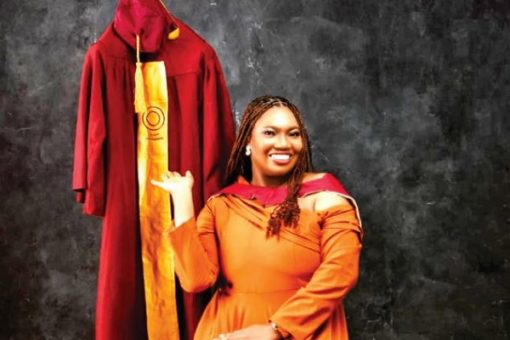
Elizabeth Abisola Akano’s life story is a proof that determination pays. Advised to withdraw from Obafemi Awolowo University on account of poor grades, she eventually graduated from the University of Lagos with First Class Honours degree and a CGPA of 4.91. She tells GBENGA ADERANTI her story of trials, despondency and triumph.
What was life like at Obafemi Awolowo University?
I would say it was an experience. I enjoyed it for the most part because everything was different from what I was used to. The experience became sour when my main reason for being there was not going well. From my very first semester there, I carried over about three courses, and they were really heavy (3 and 4 units), and even the other courses were Es. What kept me at 1.0 were my practical courses, which were 1-unit courses and were As. The results went downhill from there. By the end of my 100-level, I had about five carryovers. My CGPA sank before it got a chance to rise.
I tried to make it work in my 200-level and retook the courses I carried over, but the damage had been done. I had gone below 1.0 in two consecutive semesters (100 level second semester and 200 level first semester), so I was advised to withdraw. I tried to cross into the Economics Department at that point, but I was told my CGPA was too low to cross to any department. At that time, I knew there was no point staying, so I called home and told them I was done.
Why did you initially opt to read Biochemistry at OAU?
I didn’t pick the course. It was given to me. The course I picked was Pharmacy, but I was given Biochemistry because I didn’t meet the cut-off for Pharmacy. I accepted the offer with a plan to cross to Pharmacy after my 100 level. It didn’t happen because I failed in Biochemistry.
What was your life ambition?
My life ambition was to become a Pharmacist. That had been my plan since I entered science class in SS1. I just loved the idea of being a Pharmacist. I wanted to be in the health profession, and I knew I couldn’t handle Medicine or Nursing. Pharmacy was the next best thing at that time.
At what point did you leave OAU?
I left when I saw that there was no point staying. I had gone below 1.0, and my portal status was saying withdrawal. I was tired of fighting and deceiving myself. I had heard stories of people who stayed back after being told to withdraw and coming out with nothing to show for it because they couldn’t tell anyone at home. I did not want to be one of them. It was better to face the shame of going home than to be stuck and not moving forward. My parents knew I was trying to change departments. They didn’t know it had gotten so bad until I called to say that I was done.
When you were advised to withdraw from OAU, how did you feel? What was the first thing that came to your mind?
I was so sad and pained. I had a plan for my life. I wanted to be done with school at 20/21. The first thing on my mind was how am I going to tell Daddy and Mummy? I lived comfortably in school. I had my own room, self-contained, that they rented for me because of the experiences of my elder siblings. They spent money that they could have used for other things just so that I could have an education comfortably. I was too ashamed to tell them that after everything, I was leaving school with nothing.
You started failing in the first semester, which you described as weird. What could have been responsible for that?
Looking back now, I think I overestimated my abilities, and I was overconfident. I felt it was business as usual. I never had to over-read to pass an exam. I did the minimum, and I was able to pass. I was a bright student. I was well above average in my secondary school. I didn’t know myself; I just had an idea of who I was, and I ran with it. I didn’t understand that I was in a class with a lot of above-average students who were better than me and understood concepts better.
I was a timid girl who found it difficult to ask questions because I didn’t want to be seen as not knowing. It was a very bad way of thinking, but I didn’t know better. It really affected me, and when I finally sought help, it was too late.
Would you describe your exit as an act of God? If not, how would you explain it?
It was definitely an act of God. I was fighting a lost battle from my very first semester. I had to leave that situation for me to see the bigger picture for my life. I was in the wrong course and not in the right atmosphere where I could thrive. God created a way to take me out of it, and with a lesson. I wasn’t meant to be struggling academically and barely finishing school. He knows my end from the beginning. I was meant to be on top academically. God made it happen. At that point in time, it felt like punishment. Over the years, I understood why it had to happen. I needed realignment.
What were your parents’ reactions when they discovered that you would not continue at OAU?
My parents had similar but very unique reactions, and that was because of their personalities. My father was a softie when it came to his children. On that Sunday night, I called my immediate sister, Olamide, in tears to tell her that I was done and she should help me relay it to my parents because I was too afraid to tell them directly. My father called me barely five minutes later, begging me to stop crying. It was around the time students were committing suicide, so his initial worry was that I shouldn’t hurt myself. He was so scared that he was telling me to sleep at my neighbour’s place that night. I told him I was fine. It took a lot of convincing to get him to drop the call. I saw my father in Ife the following morning. He took me to my department. He met who he could meet and then took me to my room. We packed some clothes, and we went to Lagos.
My mum’s reaction was a mix of care, worry and disappointment. I understood because she had high hopes. She told me that I would just have to try again. In the meantime, she paid for baking school and provided everything I needed so that I wouldn’t be at home, thinking. My parents didn’t like the idea of being idle. You must be learning something at any point in time. I opened my baking business at that time, BiziCakery.
What were the initial challenges you faced when you left OAU?
The very first was shame. I didn’t know what to tell people if they asked. Everyone in my neighbourhood knew I was in school, so how would I explain being at home for close to a year? I just said I took a leave of absence to learn baking when they asked. That reduced the questions, and I was able to move from that. I spent my days indoors except when I had to go to baking school. I couldn’t tell my colleagues in school because I was too ashamed. Another challenge was proving to my parents that I wasn’t a lost cause. I could still make something out of my life.
Did you feel like committing suicide at the time of your travail?
One thing I am grateful for is that the thought of suicide never crossed my mind. I heard stories about students committing suicide, and I knew it wasn’t an option at all. No matter the emotional turmoil I was going through, I knew I wanted to live my life to the fullest, so ending it wasn’t on my mind.
How did you manage to summon enough courage to write UTME?
As I mentioned before, I have a very supportive family. My father personally took me to the library to read before I started tutorials in September, 2018. I attended Rise-up tutorials, and I learnt a lot about myself during that period. Luckily for me, I didn’t need to write another WAEC because I did Economics and Geography. I only needed to learn Government for my JAMB. My mum taught Government as she is a teacher, so it was very easy for me to read and understand the subject.
I have always been good at Maths, English and Economics, but I entered the tutorial as someone who knew nothing, just so I could learn. I did tutorials and still read at the centre till 7 pm before making my way home. I left no stone unturned and read as if my life depended on it, and it worked. I scored 290 in my UTME and went on to score 25 out of 30 in my post UTME.
How did your friends within and outside the school react when they discovered that you were asked to withdraw?
I didn’t tell them immediately because I was fighting a lot of battles internally, and I was also ashamed. When I told them, the popular opinion was “why didn’t you say anything earlier?” They were very apologetic and sad on my behalf. They were supportive and checked on me every now and then. I still talk to a number of my friends in OAU to this day, so we haven’t lost contact.
Why did you opt to study Economics Education?
I took my time to look at my strengths. I discovered that the social sciences came easily to me, and I could relate with it better. I knew I was mentally done with sciences because there is no course that I wouldn’t have to do Chemistry and Physics which were the courses I failed in OAU. I did my research and I wasn’t bad at Mathematics. I would have done Pure Economics, but I realised that I would have to do Accounting, which I have never done in my life, and learning it at that point in time was going to be a lot for me as I was learning Government too. My parents advised me to go for Education instead because of the opportunities. I can major in either Economics or the Education aspect for my Masters so I took their advice and went for Economics Education.
To what extent did your experience at the OAU help you at the University of Lagos?
I had experience with higher institutions when I entered UNILAG because of my OAU experience, so nothing shocked me. I believe I had an edge in my class because of that. OAU had a way of teaching resilience in the face of struggle, and I took that into UNILAG. When my classmates complained about how difficult a thing was, I would just smile because I had seen something similar before and I knew how to pace myself to solve it. I understood how the system worked, and I used it to my advantage.
What would you tell other students who are currently facing the same challenges you faced at OAU?
There is so much I want to say. Failure is not the end of the world. People have failed, and people will still fail. It doesn’t mean you are dumb or a dullard. You haven’t just had an understanding of who you are and your abilities. It is okay to take a step back and reassess yourself. Don’t ever give in to the thought of not being brilliant. You might just be taking the wrong course. You failed academically, but that doesn’t mean you failed in life.
SEEK HELP. Don’t keep quiet. If you are failing, don’t wait before you ask for assistance. Never be too shy to ask your classmates for help; that’s why you are not schooling in solitude. Ask questions early and don’t be afraid to leave. You might feel terrible, but it is better than being stuck and not moving forward. It would seem like you are moving backward but you aren’t; you are just taking a step back to realign yourself, and you would be the better for it.
Most importantly, have a relationship with God. He helped me through the dark time. God doesn’t need you for anything, but you need Him for everything.
What did you do differently at the University of Lagos that you did not do while at the OAU?
The very first thing I did was to stop keeping quiet and ask questions. Part of what affected me in OAU was that I was too timid to talk to people and ask for assistance. I was just in my little bubble. I got to know myself first and the type of learner I am. I got to know that I understand things better visually and also by writing things out. I also got to know that I learn better when I start at the beginning of any topic and work my way to the complex parts. So I read better and smarter. I didn’t study daily, but I made sure that when I did, I learnt something. I also did a lot of tutoring because I realised that things stuck more when I taught my peers.
What was the culture shock you experienced at UNILAG?
The first shock was how small UNILAG premises were, compared to OAU. Another shock was that I got to see my advisers and lecturers more often than I was used to. They were always willing to listen. I had an adviser in OAU, but I wasn’t in tune enough to figure out who they were, as I didn’t see them during my orientation. I also didn’t have anything to do in my department in my first few semesters at OAU, so I couldn’t meet them.
Another shock was that UNILAG had so many programmes and opportunities for students to grow beyond academics. I got to be a part of so many trainings and student-led initiatives.
How has the change in course and varsity changed your ambition?
It has changed so much. From a Biochemist who never was to an Educator and Economist. I want to make an impact in the education space because I know my story isn’t meant for me alone. I changed my mindset, and I am the better for it. I derive joy from educating, and I know I have a calling in education. I don’t want other people to go through what I did. What happened to me would have been avoided if I had someone take a second look at me and ask me the right questions so that I could discover myself.
Tell me something you are not likely to forget in a hurry at the OAU and UNILAG.
The feeling of failure in OAU and the feeling of victory in UNILAG that I felt, and the lesson from that, is what I will not forget in a hurry. I learnt a life lesson and the role of realignment when things get bad. I also learnt that with humility, you can learn anything and from anyone.
Your regrets?
My regrets are not knowing myself before entering OAU, and I wish I had finished school younger. But with the outcome I have, the regrets have been overshadowed. I learnt during this journey, and I can’t buy it anywhere.
Do you still want to pursue a career in education?
And yes, I definitely want to pursue a career in education. As I said before, my story is not meant for me alone. There are lessons to draw from it. I want to build a career around making sure that other students don’t have to go through what I went through, and discover themselves early.
Source: https://thenationonlineng.net/my-transformation-from-oau-dropout-to-unilag-first-class-graduate/
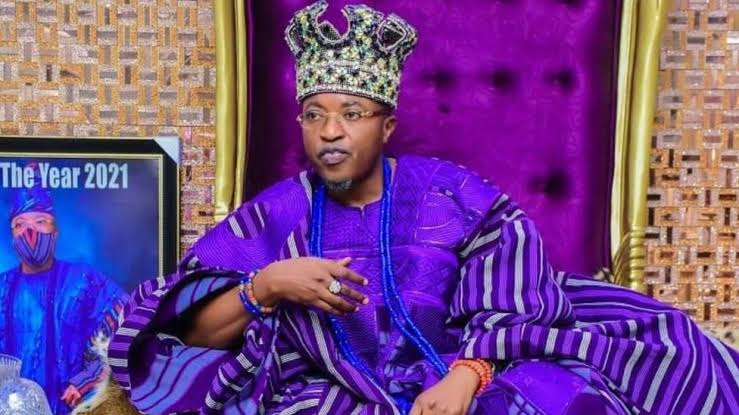
The Paramount Ruler of Iwoland, His Imperial Majesty Oba Abdulrosheed Adewale Akanbi, has spoken out strongly against the xenophobic attacks happening in South Africa.
He expressed deep disappointment and called for African countries to come together and implement collective sanctions against South Africa.
Oba Akanbi described South Africa as bringing shame to the continent and urged President Bola Ahmed Tinubu to take firm action, including recalling their ambassadors.
Recognising Nigeria as the giant of Africa, he emphasised that any harm to Nigerians or other black people is a hurt to all of Africa, and should be met with strong responses.
The recent violence targeting Nigerians and their businesses has not only caused international embarrassment but also highlighted the need for unity and decisive measures within Africa.
He suggested that Nigeria respond by recalling its ambassador and summoning the South African ambassador for explanations. Additionally, he encouraged peaceful protests in front of South African embassies across African countries to show solidarity and condemn these attacks.
In a statement shared with the press through his press secretary, Alli Ibraheem, Oluwo said, “South Africa has caused embarrassment by attacking Nigerians and their businesses. Africans are free to live and work anywhere on the continent. There is no justification for attacking fellow Africans. We must unite now to stop the madness in South Africa through strong sanctions. A lasting solution should be sought through collective efforts, including emergency meetings and possibly recalling ambassadors to protest these xenophobic attacks. South African citizens must realise that they are not above all Africans. Nigeria, as the leader of Africa, should take charge. Attacking fellow black Africans, especially those who fought against apartheid, is an act of ingratitude. Instead, efforts should focus on addressing the real villains—the white oppressors of the past. Attacks on Africans on their own soil threaten the unity of the continent. We are all connected, and it’s essential that Africa stands together and does not harm itself. Our continent’s roots run deep in history, and we should never lower our standards or allow hatred to divide us.”
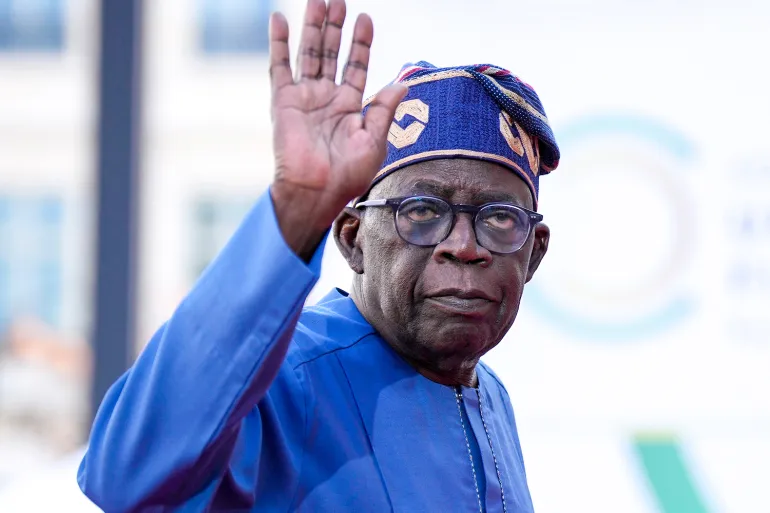
Ahead of the 2027 general elections, a collection of groups, led by the Lagos State Prominent Indigenes Forum (LASPI), is backing President Bola Ahmed Tinubu for a second term in 2027.
In a communique issued at the end of a summit organised by the forum titled ‘Promoting Greater Participation of Lagos State Indigenes in Governance and Politics,’ the groups emphasised that there was no other suitable candidate than Tinubu, ‘our own,’ for the presidency in 2027.
The 17- point Communique was signed by the convener, Chief Adesunbo Onitiri and other prominent Lagosians.
The Summit was held at the Eko Club, Surulere, Lagos, and chaired by Asiwaju Dr Michael Olawale-Cole, and was graced by Pa Tajudeen Oluyole Olusi, respected traditional leaders, eminent indigenes, and representatives of numerous indigenous associations drawn from the five IBILE Divisions of Lagos State.
The Summit featured keynote presentations by Prof. Olanrewaju Fagboun and Prof. Olumuyiwa Noah.
Following extensive deliberations, the Summit arrived at the following resolutions:
” The Summit reaffirmed its support for the Renewed Hope Agenda of His Excellency, President Asiwaju Bola Ahmed Tinubu, GCFR, and expressed strong support for his continued leadership as the nation approaches the 2027 general elections.
” Indigenous associations are encouraged to work in a more coordinated manner to promote participation at all levels of governance.
” Stakeholders resolved to adopt long-term strategies for indigenous representation.
” Indigenes are urged to move from passive observation to active involvement.
“Indigenes must actively engage in the electoral process.
” Greater collaboration across IBILE divisions is essential.
“The need for increased indigenous participation and cultural preservation was emphasised.
” Indigenes are encouraged to take active roles in community organisations.
“There is a need to deepen political awareness among youths.
“Traditional values and leadership structures should be strengthened.
“Enhanced civic education is required.
“The use of local languages should be encouraged.
” Digital platforms should be leveraged.
“Indigenous communities must engage proactively with changing realities.
“The Summit acknowledged development strides while advocating inclusion.
” The Forum was commended for convening the Summit.
“The Summit recommended regular engagements.”
Concluding, the Summit reaffirmed that the future relevance, influence, and prosperity of Lagos State indigenes would depend on unity, organisation, and sustained participation in governance and political processes.
The Summit further reaffirmed its support for the continued leadership and second-term bid of His Excellency, President Asiwaju Bola Ahmed Tinubu, GCFR, as the nation approaches the 2027 presidential elections.


Igbokoda crash: Olugbo mourns victims, consoles Tinubu, Air Force

Accident: Normalcy returns to Lagos roads as LASEMA rescues hit-and-run victim

LASEMA responds to multiple emergencies
-

 Fashion9 years ago
These ’90s fashion trends are making a comeback in 2017
-
Entertainment9 years ago
The final 6 ‘Game of Thrones’ episodes might feel like a full season
-
Business9 years ago
3 Ways to make your business presentation more relatable
-
Business9 years ago
The 9 worst mistakes you can ever make at work
-
Fashion9 years ago
According to Dior Couture, this taboo fashion accessory is back
-
Sports9 years ago
Steph Curry finally got the contract he deserves from the Warriors
-
Fashion9 years ago
Model Jocelyn Chew’s Instagram is the best vacation you’ve ever had
-
Sports9 years ago
Phillies’ Aaron Altherr makes mind-boggling barehanded play