Uncategorized
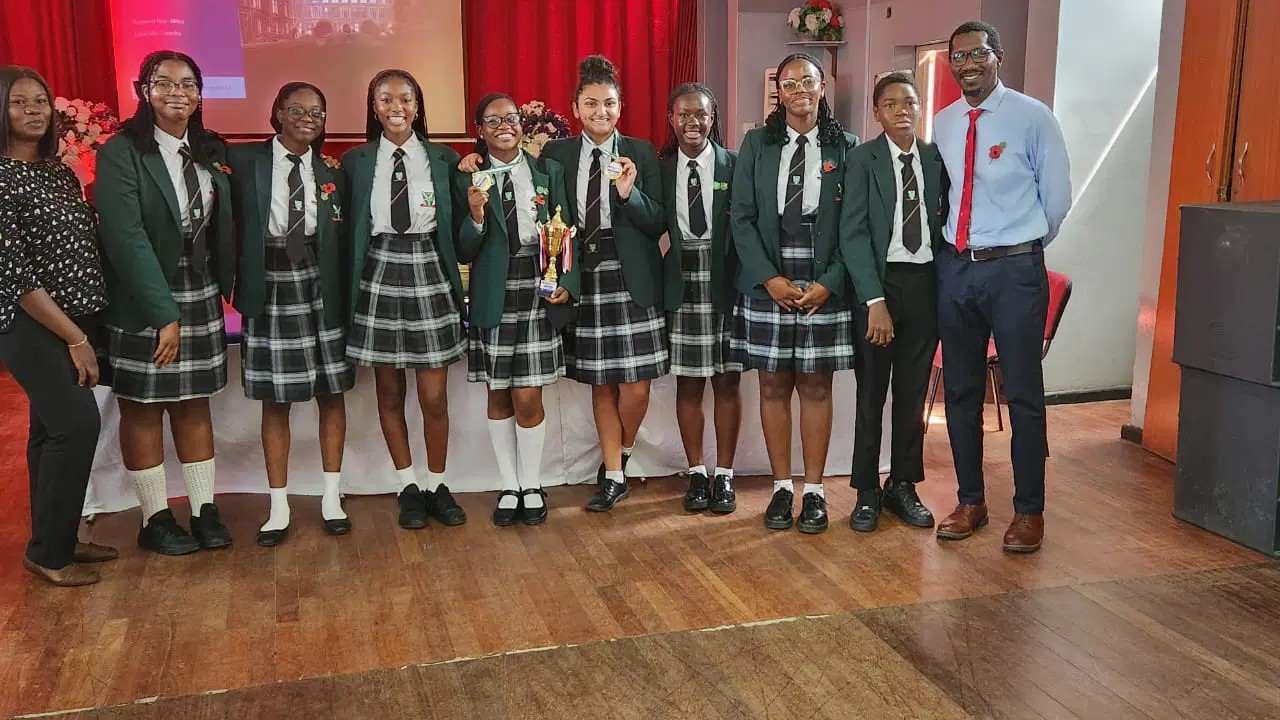
UK varsity hosts public speaking competition in Lagos
As Nigeria intensifies efforts to build a knowledge-driven economy, global academic partnerships are increasingly playing a strategic role in strengthening the country’s human capital base.
In line with this shift, the University of Sheffield will host a Public Speaking Competition in Lagos on Monday, bringing together students from ten leading secondary schools across the state.
The initiative underscores a growing recognition that Nigeria’s long-term economic growth will depend not only on natural resources but on the quality of its young people, their ability to think critically, communicate effectively, and lead confidently in an increasingly interconnected world.
The University of Sheffield, a United Kingdom–based institution and member of the prestigious Russell Group, is widely regarded for its academic.
However, beyond rankings and research output, the university’s engagement in Lagos signals a broader evolution in international education partnerships. Rather than focusing solely on tertiary-level recruitment, leading global institutions are increasingly investing in early-stage talent development, supporting initiatives that raise aspiration and academic standards long before university admission decisions are made.
Organisers say the Lagos competition is designed to provide students with a platform to articulate ideas, engage constructively with real-world issues, and build confidence in public expression. While public speaking is often viewed as extracurricular, education experts note that communication skills are foundational to leadership in business, governance, entrepreneurship, and innovation.
For participating schools, the competition offers exposure to international academic expectations and reinforces the importance of holistic education , where intellectual ability is matched with clarity of expression and confidence. For students, it presents an opportunity to test their voices in a competitive yet supportive environment, helping them see themselves as future leaders within a global context.
Lagos, widely recognised as Nigeria’s commercial and innovation hub, provides a fitting backdrop for the engagement. Hosting a globally connected academic initiative in the city further highlights its role in shaping the country’s future workforce and leadership pipeline.
Education stakeholders observe that such partnerships align closely with Nigeria’s broader human capital development agenda. As businesses increasingly demand graduates who can operate across cultures and communicate persuasively, collaborations between globally ranked universities and local institutions may prove catalytic in accelerating education reform.
Beyond the event itself, analysts say the University of Sheffield’s presence in Lagos reflects a commitment to investing in Nigeria’s youth and recognising that leadership development must begin early.
On 23 February 2026, Lagos will host more than a student competition. It will host what many observers describe as a meaningful exchange between global academic excellence and local ambition , one that speaks directly to Nigeria’s long-term economic aspirations.
Uncategorized
IOM applauds FG, NCFRMI’s commitment to strengthening migration management
The International Organisation for Migration (IOM) has applauded the Federal Government and the National Commission for Refugees, Migrants and Internally Displaced Persons (NCFRMI) for their commitment to strengthening migration management in line with the Global Compact for Safe, Orderly and Regular Migration (GCM).
IOM’s Chief of Mission in Nigeria, Sharon Dimanche, made the remarks while welcoming participants to the meeting on Voluntary National Review (VNR) on the implementation of the Global Compact for Safe, Orderly and Regular Migration (GCM) ahead of the 2026 International Migration Review Forum (IMRF).
The event, which was held between February 17 and 21 at the Lagos Continental Hotel, Victoria Island, Lagos, had other international donors, members of the civil society, federal and state government agencies, among others, in attendance.
Addressing the participants, Dimanche also acknowledged “the support of our partners, especially the European Union and the Migration Multi-Partner Trust Fund (MMPTF), whose continued investment is enabling inclusive dialogue, stronger coordination, and practical progress across key areas of migration governance in Nigeria.”
She noted that Nigeria has long demonstrated leadership as a champion country of the GCM, adding that “this is reflected in important national milestones, including the validation of the revised National Migration Policy, the development of the integrated National Implementation Plan, and successive voluntary reviews, both the 2022 voluntary review and the 2024 national GCM review. These efforts underscore Nigeria’s strong ownership of the GCM framework and its whole-of-government, whole-of-society approach.
“As we stand on the threshold of the 2026 IMRF, scheduled for May, today’s meeting comes at a pivotal moment. Globally, the UN Network on Migration has outlined a clear IMRF roadmap, including timelines for voluntary national reports, guidance for roundtable inputs, and opportunities to strengthen multi-stakeholder engagement.”
At the country level, she said “this meeting is an essential platform to coordinate our preparations: to reflect on achievements since the last IMRF cycle; to assess progress on GCM-related indicators and priorities; and to identify the actions needed for Nigeria’s effective representation at the Forum.”
Continuing, Dimanche said “our task at this engagement is threefold: To jointly undertake Nigeria’s voluntary national review on the GCM, being conducted during this VNR Workshop in Lagos. This workshop constitutes Nigeria’s formal national review process ahead of the IMRF, bringing together government ministries, UN agencies, civil society, and key stakeholders to assess progress since the 2022 voluntary review and the 2024 national GCM review. Through plenary discussions and structured breakout sessions co-led by relevant Government MDAs and UN entities, we will validate evidence, document good practices, identify persistent challenges, and agree on renewed commitments that will inform Nigeria’s inputs to the IMRF roundtables and the overall national position for the Forum.
“To ensure a shared understanding of Nigeria’s IMRF 2026 timeline and entry points for coordinated UN support, including key milestones such as finalizing the voluntary national review/report, articulating renewed pledges, and developing Nigeria’s contributions to the IMRF roundtables.
“To strengthen coordination across government, UNNM entities, civil society, and development partners, recognizing that effective engagement at the IMRF requires not only technical preparation, but also coherent messaging, clarity of institutional roles, and harmonized support.”
She emphasized that Nigeria’s participation in IMRF 2026 is not merely a reporting exercise. “It is an opportunity to showcase national innovations, elevate strategic priorities, and contribute to shaping the global migration agenda. It is also an opportunity to renew pledges grounded in evidence, and to advocate for strengthened partnerships and resources to address multidimensional migration challenges—from data and evidence generation, to protection, labour mobility, migration and development, and governance.
“The IOM Nigeria Mission remains fully committed to supporting the Government of Nigeria and the UN Network on Migration to ensure that Nigeria approaches the IMRF with a unified voice, solid evidence, and clear priorities. With your expertise and collective dedication, and with the valued support of partners and our generous donors, the MMPTF and the European Union, I am confident that our deliberations will yield actionable outcomes, strengthened coordination, and a clear roadmap toward both the VNR process and effective participation at the IMRF.”
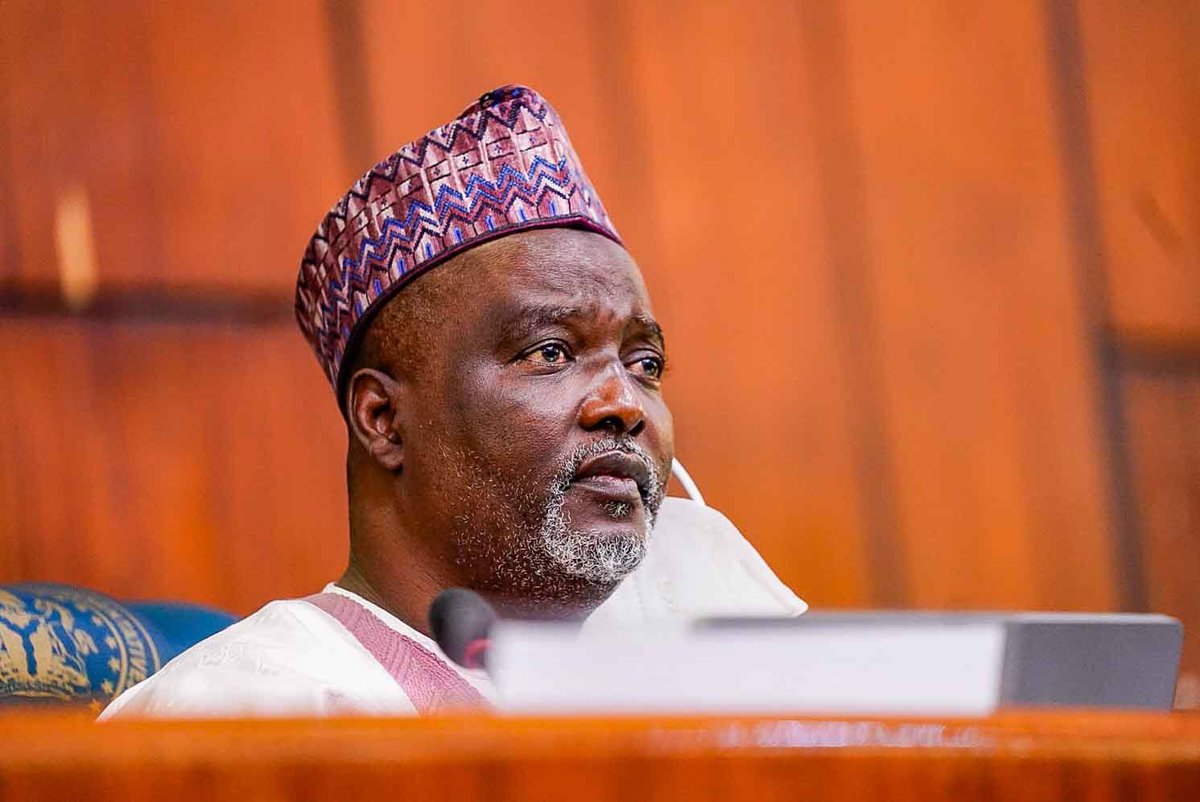
Also addressing the participants, the Honourable Federal Commissioner, NCFRMI, Hon. Dr. Tijani Aliyu Ahmed equally extended appreciation to the Federal Government, the United Nations Network on Migration for the sustained technical guidance, institutional support and capacity building provided to Nigeria in the implementation of the Compact.
“I equally acknowledge the invaluable support of the Resident Coordinator’s Office for strengthening system-wide coherence and coordination across the United Nations Country Team and partners in Nigeria.”
He recalled that Nigeria adopted the Global Compact for Migration following its endorsement by the United Nations General Assembly in December 2018, and “since then we have demonstrated sustained political will and institutional commitment to its implementation. As a Champion Country, Nigeria has taken deliberate steps to domesticate the principles and objectives of the GCM within our national migration governance framework.
“The recently validated revised National Migration Policy and its integrated Implementation Plan, which doubles as Nigeria’s National GCM Implementation Plan, stand as clear evidence of this alignment between global commitments and national action.”
He added that in preparation for the first IMRF in 2022, Nigeria conducted its inaugural Voluntary National Review in Lagos through a whole-of-government and whole-of-society approach. “The process strengthened coordination among stakeholders and informed Nigeria’s national report, pledge and interventions at IMRF 2022. Building on that foundation, Nigeria convened a second Voluntary National Review in August 2024 in Abuja, structured around Technical Working Groups covering Labour Migration, Migration Data, Border Management, Return, Readmission and Reintegration, and Diaspora Engagement. The outcomes informed Nigeria’s engagement at the regional review and reinforced sustained national monitoring.”
This 2026 Review according to him is required to track progress since the 2024 regional review, assess implementation across the twenty-three objectives of the Compact, and consolidate national priorities, challenges and areas for improvement ahead of IMRF 2026. “Over the next three days, discussions will follow the GCM review template and align with the thematic areas of the IMRF roundtables. Breakout sessions chaired by members of the United Nations Network on Migration and supported by national thematic leads will evaluate progress, identify lessons learned and generate structured talking points to guide Nigeria’s participation at IMRF 2026.
“This consultation also provides an opportunity to stock take Nigeria’s pledges made at IMRF 2022, highlighting achievements, gaps and opportunities for renewed commitment. Furthermore, building on the evidence of impact from Nigeria’s side event at IMRF 2022, preparations are underway for a side event at IMRF 2026 to showcase practical achievements, lessons learned and pathways for strengthening regular migration channels.
“At this juncture, I would like to reiterate the unwavering commitment of the National Commission for Refugees, Migrants and Internally Displaced Persons, to the effective implementation of the Global Compact for Migration and to sustaining the whole-of-government and whole-of-society approach that underpins this national process.
“We remain deeply appreciative of the consistent support of the International Organization for Migration and other members of the United Nations Network on Migration in strengthening Nigeria’s migration governance efforts. As we prepare for IMRF 2026, we look forward to sustained technical collaboration and partnership to facilitate Nigeria’s effective engagement at the Review Forum and the successful delivery of our proposed side event. Continued cooperation will be critical in transforming commitments into tangible, evidence-based results.”
>>>>>>>>>>>>>>>>>>>>>>>>>>>>>>>>>>>>>>>>>>>>>>>>>>>>>>>>>>>
Uncategorized
‘My transformation from OAU dropout to UNILAG First Class graduate’
Elizabeth Abisola Akano’s life story is a proof that determination pays. Advised to withdraw from Obafemi Awolowo University on account of poor grades, she eventually graduated from the University of Lagos with First Class Honours degree and a CGPA of 4.91. She tells GBENGA ADERANTI her story of trials, despondency and triumph.
What was life like at Obafemi Awolowo University?
I would say it was an experience. I enjoyed it for the most part because everything was different from what I was used to. The experience became sour when my main reason for being there was not going well. From my very first semester there, I carried over about three courses, and they were really heavy (3 and 4 units), and even the other courses were Es. What kept me at 1.0 were my practical courses, which were 1-unit courses and were As. The results went downhill from there. By the end of my 100-level, I had about five carryovers. My CGPA sank before it got a chance to rise.
I tried to make it work in my 200-level and retook the courses I carried over, but the damage had been done. I had gone below 1.0 in two consecutive semesters (100 level second semester and 200 level first semester), so I was advised to withdraw. I tried to cross into the Economics Department at that point, but I was told my CGPA was too low to cross to any department. At that time, I knew there was no point staying, so I called home and told them I was done.
Why did you initially opt to read Biochemistry at OAU?
I didn’t pick the course. It was given to me. The course I picked was Pharmacy, but I was given Biochemistry because I didn’t meet the cut-off for Pharmacy. I accepted the offer with a plan to cross to Pharmacy after my 100 level. It didn’t happen because I failed in Biochemistry.
What was your life ambition?
My life ambition was to become a Pharmacist. That had been my plan since I entered science class in SS1. I just loved the idea of being a Pharmacist. I wanted to be in the health profession, and I knew I couldn’t handle Medicine or Nursing. Pharmacy was the next best thing at that time.
At what point did you leave OAU?
I left when I saw that there was no point staying. I had gone below 1.0, and my portal status was saying withdrawal. I was tired of fighting and deceiving myself. I had heard stories of people who stayed back after being told to withdraw and coming out with nothing to show for it because they couldn’t tell anyone at home. I did not want to be one of them. It was better to face the shame of going home than to be stuck and not moving forward. My parents knew I was trying to change departments. They didn’t know it had gotten so bad until I called to say that I was done.
When you were advised to withdraw from OAU, how did you feel? What was the first thing that came to your mind?
I was so sad and pained. I had a plan for my life. I wanted to be done with school at 20/21. The first thing on my mind was how am I going to tell Daddy and Mummy? I lived comfortably in school. I had my own room, self-contained, that they rented for me because of the experiences of my elder siblings. They spent money that they could have used for other things just so that I could have an education comfortably. I was too ashamed to tell them that after everything, I was leaving school with nothing.
You started failing in the first semester, which you described as weird. What could have been responsible for that?
Looking back now, I think I overestimated my abilities, and I was overconfident. I felt it was business as usual. I never had to over-read to pass an exam. I did the minimum, and I was able to pass. I was a bright student. I was well above average in my secondary school. I didn’t know myself; I just had an idea of who I was, and I ran with it. I didn’t understand that I was in a class with a lot of above-average students who were better than me and understood concepts better.
I was a timid girl who found it difficult to ask questions because I didn’t want to be seen as not knowing. It was a very bad way of thinking, but I didn’t know better. It really affected me, and when I finally sought help, it was too late.
Would you describe your exit as an act of God? If not, how would you explain it?
It was definitely an act of God. I was fighting a lost battle from my very first semester. I had to leave that situation for me to see the bigger picture for my life. I was in the wrong course and not in the right atmosphere where I could thrive. God created a way to take me out of it, and with a lesson. I wasn’t meant to be struggling academically and barely finishing school. He knows my end from the beginning. I was meant to be on top academically. God made it happen. At that point in time, it felt like punishment. Over the years, I understood why it had to happen. I needed realignment.
What were your parents’ reactions when they discovered that you would not continue at OAU?
My parents had similar but very unique reactions, and that was because of their personalities. My father was a softie when it came to his children. On that Sunday night, I called my immediate sister, Olamide, in tears to tell her that I was done and she should help me relay it to my parents because I was too afraid to tell them directly. My father called me barely five minutes later, begging me to stop crying. It was around the time students were committing suicide, so his initial worry was that I shouldn’t hurt myself. He was so scared that he was telling me to sleep at my neighbour’s place that night. I told him I was fine. It took a lot of convincing to get him to drop the call. I saw my father in Ife the following morning. He took me to my department. He met who he could meet and then took me to my room. We packed some clothes, and we went to Lagos.
My mum’s reaction was a mix of care, worry and disappointment. I understood because she had high hopes. She told me that I would just have to try again. In the meantime, she paid for baking school and provided everything I needed so that I wouldn’t be at home, thinking. My parents didn’t like the idea of being idle. You must be learning something at any point in time. I opened my baking business at that time, BiziCakery.
What were the initial challenges you faced when you left OAU?
The very first was shame. I didn’t know what to tell people if they asked. Everyone in my neighbourhood knew I was in school, so how would I explain being at home for close to a year? I just said I took a leave of absence to learn baking when they asked. That reduced the questions, and I was able to move from that. I spent my days indoors except when I had to go to baking school. I couldn’t tell my colleagues in school because I was too ashamed. Another challenge was proving to my parents that I wasn’t a lost cause. I could still make something out of my life.
Did you feel like committing suicide at the time of your travail?
One thing I am grateful for is that the thought of suicide never crossed my mind. I heard stories about students committing suicide, and I knew it wasn’t an option at all. No matter the emotional turmoil I was going through, I knew I wanted to live my life to the fullest, so ending it wasn’t on my mind.
How did you manage to summon enough courage to write UTME?
As I mentioned before, I have a very supportive family. My father personally took me to the library to read before I started tutorials in September, 2018. I attended Rise-up tutorials, and I learnt a lot about myself during that period. Luckily for me, I didn’t need to write another WAEC because I did Economics and Geography. I only needed to learn Government for my JAMB. My mum taught Government as she is a teacher, so it was very easy for me to read and understand the subject.
I have always been good at Maths, English and Economics, but I entered the tutorial as someone who knew nothing, just so I could learn. I did tutorials and still read at the centre till 7 pm before making my way home. I left no stone unturned and read as if my life depended on it, and it worked. I scored 290 in my UTME and went on to score 25 out of 30 in my post UTME.
How did your friends within and outside the school react when they discovered that you were asked to withdraw?
I didn’t tell them immediately because I was fighting a lot of battles internally, and I was also ashamed. When I told them, the popular opinion was “why didn’t you say anything earlier?” They were very apologetic and sad on my behalf. They were supportive and checked on me every now and then. I still talk to a number of my friends in OAU to this day, so we haven’t lost contact.
Why did you opt to study Economics Education?
I took my time to look at my strengths. I discovered that the social sciences came easily to me, and I could relate with it better. I knew I was mentally done with sciences because there is no course that I wouldn’t have to do Chemistry and Physics which were the courses I failed in OAU. I did my research and I wasn’t bad at Mathematics. I would have done Pure Economics, but I realised that I would have to do Accounting, which I have never done in my life, and learning it at that point in time was going to be a lot for me as I was learning Government too. My parents advised me to go for Education instead because of the opportunities. I can major in either Economics or the Education aspect for my Masters so I took their advice and went for Economics Education.
To what extent did your experience at the OAU help you at the University of Lagos?
I had experience with higher institutions when I entered UNILAG because of my OAU experience, so nothing shocked me. I believe I had an edge in my class because of that. OAU had a way of teaching resilience in the face of struggle, and I took that into UNILAG. When my classmates complained about how difficult a thing was, I would just smile because I had seen something similar before and I knew how to pace myself to solve it. I understood how the system worked, and I used it to my advantage.
What would you tell other students who are currently facing the same challenges you faced at OAU?
There is so much I want to say. Failure is not the end of the world. People have failed, and people will still fail. It doesn’t mean you are dumb or a dullard. You haven’t just had an understanding of who you are and your abilities. It is okay to take a step back and reassess yourself. Don’t ever give in to the thought of not being brilliant. You might just be taking the wrong course. You failed academically, but that doesn’t mean you failed in life.
SEEK HELP. Don’t keep quiet. If you are failing, don’t wait before you ask for assistance. Never be too shy to ask your classmates for help; that’s why you are not schooling in solitude. Ask questions early and don’t be afraid to leave. You might feel terrible, but it is better than being stuck and not moving forward. It would seem like you are moving backward but you aren’t; you are just taking a step back to realign yourself, and you would be the better for it.
Most importantly, have a relationship with God. He helped me through the dark time. God doesn’t need you for anything, but you need Him for everything.
What did you do differently at the University of Lagos that you did not do while at the OAU?
The very first thing I did was to stop keeping quiet and ask questions. Part of what affected me in OAU was that I was too timid to talk to people and ask for assistance. I was just in my little bubble. I got to know myself first and the type of learner I am. I got to know that I understand things better visually and also by writing things out. I also got to know that I learn better when I start at the beginning of any topic and work my way to the complex parts. So I read better and smarter. I didn’t study daily, but I made sure that when I did, I learnt something. I also did a lot of tutoring because I realised that things stuck more when I taught my peers.
What was the culture shock you experienced at UNILAG?
The first shock was how small UNILAG premises were, compared to OAU. Another shock was that I got to see my advisers and lecturers more often than I was used to. They were always willing to listen. I had an adviser in OAU, but I wasn’t in tune enough to figure out who they were, as I didn’t see them during my orientation. I also didn’t have anything to do in my department in my first few semesters at OAU, so I couldn’t meet them.
Another shock was that UNILAG had so many programmes and opportunities for students to grow beyond academics. I got to be a part of so many trainings and student-led initiatives.
How has the change in course and varsity changed your ambition?
It has changed so much. From a Biochemist who never was to an Educator and Economist. I want to make an impact in the education space because I know my story isn’t meant for me alone. I changed my mindset, and I am the better for it. I derive joy from educating, and I know I have a calling in education. I don’t want other people to go through what I did. What happened to me would have been avoided if I had someone take a second look at me and ask me the right questions so that I could discover myself.
Tell me something you are not likely to forget in a hurry at the OAU and UNILAG.
The feeling of failure in OAU and the feeling of victory in UNILAG that I felt, and the lesson from that, is what I will not forget in a hurry. I learnt a life lesson and the role of realignment when things get bad. I also learnt that with humility, you can learn anything and from anyone.
Your regrets?
My regrets are not knowing myself before entering OAU, and I wish I had finished school younger. But with the outcome I have, the regrets have been overshadowed. I learnt during this journey, and I can’t buy it anywhere.
Do you still want to pursue a career in education?
And yes, I definitely want to pursue a career in education. As I said before, my story is not meant for me alone. There are lessons to draw from it. I want to build a career around making sure that other students don’t have to go through what I went through, and discover themselves early.
Source: https://thenationonlineng.net/my-transformation-from-oau-dropout-to-unilag-first-class-graduate/
Uncategorized
Hello world!
Welcome to WordPress. This is your first post. Edit or delete it, then start writing!
-
Fashion9 years agoThese ’90s fashion trends are making a comeback in 2017
-
Entertainment9 years agoThe final 6 ‘Game of Thrones’ episodes might feel like a full season
-
Fashion9 years agoAccording to Dior Couture, this taboo fashion accessory is back
-
Entertainment9 years agoThe old and New Edition cast comes together to perform
-
Sports9 years agoPhillies’ Aaron Altherr makes mind-boggling barehanded play
-
Business9 years agoUber and Lyft are finally available in all of New York State
-
Entertainment9 years agoDisney’s live-action Aladdin finally finds its stars
-
Sports9 years agoSteph Curry finally got the contract he deserves from the Warriors