
News
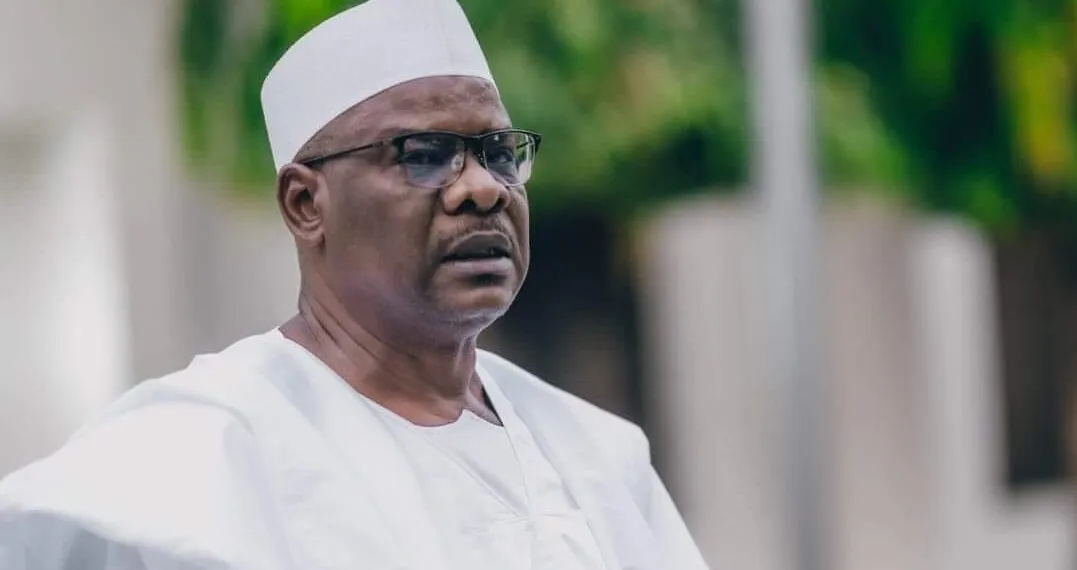
2027: Atiku, Obi, Amaechi bringing nothing new, says Ndume

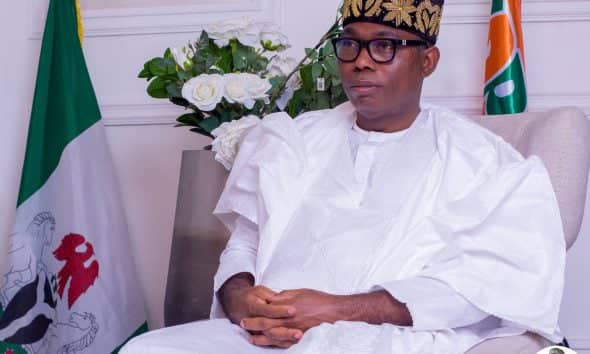
Presidential candidate of the Social Democratic Party (SDP) in the 2027 general elections, Prince Adewole Adebayo, has said that Nigeria’s crisis is rooted largely in bad governance, weak institutions and a political class more interested in winning elections than solving the country’s problems.
Adebayo disclosed this during the Nigerian Bar Association (NBA) conference in Port Harcourt, Rivers State.
Adebayo, who was among the presidential candidates invited to the NBA conference to present their visions for governing Nigeria, said Nigerians were less concerned about the political fortunes of individual politicians than about having a government that would improve their lives.
He said the repeated elections since 1999 had failed to produce the fundamental changes Nigerians expected, arguing that the country needed a new political direction anchored on the Constitution and its fundamental objectives.
According to him, the SDP had rejected the traditional politics of ethnic and religious rotation, money and political calculations, insisting that competence and commitment to the Nigerian people should determine who governs the country.
Adebayo said his party had previously engaged some “professional politicians” who sought to form a coalition with the SDP, but that the discussions exposed fundamental differences in political philosophy.
“We discovered three things. One, that they don’t care about ideology; they just want to win and figure it out later,” he said.
He explained that the SDP’s commitment was fundamentally tied to Chapter Two of the Nigerian Constitution, particularly its Fundamental Objectives and Directive Principles of State Policy.
Adebayo said anyone seeking political office under the SDP must subscribe to those principles, adding that the party would not rotate political power on the basis of ethnicity or religion.
“We do not rotate power based on ethnicity and religion. We do it based on your understanding of the needs of the country,” he said.
He also rejected the influence of money in determining political leadership, saying the SDP would rather build a coalition with ordinary Nigerians.
According to him, politicians would only be welcomed into such a coalition if they were prepared to subscribe to the Constitution and the ethical principles of the party.
On the contentious issue of fuel subsidy, Adebayo said the country should stop dwelling on whether subsidy should be removed, arguing that what Nigerians needed was a sustainable supply of petroleum products at affordable prices and a stable exchange rate.
He recalled that the SDP had warned against the removal of subsidy and predicted the hardship that would follow.
Adebayo said the current situation had validated the party’s position, arguing that the subsidy debate had become largely academic because the policy had already been dismantled.
He likened the situation to a medical patient whose appendix had already been removed, saying it would be impossible to simply reverse the procedure.
“Subsidy is like giving somebody a scholarship to a university that does not exist. The scholarship is useless,” he said.
He maintained that the real challenge was reducing energy costs through sustainable measures rather than returning to the old subsidy regime.
On insecurity, the SDP candidate launched one of his strongest attacks on the political establishment, arguing that Nigeria’s security crisis could not be solved without confronting the political and economic interests allegedly sustaining it.
He said the country’s security expenditure had failed to translate into genuine security for citizens, insisting that security allocations should be examined alongside the broader structure of governance and accountability.
“The theme of our own campaign is ‘Farewell to Poverty and Insecurity’, and they are linked,” he said.
Adebayo alleged that elements within the political establishment and their collaborators benefit from insecurity, particularly kidnapping and illegal mining, and argued that Nigerians would continue to suffer if they repeatedly returned the same politicians to power.
He said the solution required confronting the networks benefiting from violence, illegal mining and insecurity rather than merely increasing security spending.
“If you remove these politicians, who you keep re-electing, they will go away, and their terrorist partners will go away. If you keep re-electing them, the terrorists will continue because they and the terrorists are in partnership,” he alleged.
He also criticised what he described as the excessive use of security spending without adequate accountability, arguing that past administrations had left behind huge financial liabilities.
Addressing the persistent farmer-herder conflict, Adebayo rejected what he described as a simplistic portrayal of the crisis as a clash between farmers and herders.
“I am a herder myself. I have close to one million cattle, and I’ve not killed anybody before,” he said.
He argued that the government should focus on identifying the real beneficiaries of violence and illegal exploitation of Nigeria’s natural resources.
Adebayo proposed stronger regulation of the mining sector, arguing that miners should be properly identified and held responsible for criminal activities occurring within territories where they operate.
He also called for reforms to the Office of the National Security Adviser and a fundamental reorganisation of the armed forces.
According to him, Nigeria needs a “people’s army” that is structured to respond effectively to threats confronting communities across the country.
He criticised what he described as the creation of military divisions without sufficient manpower, arguing that the country needed properly equipped and adequately staffed formations rather than administrative changes that do not translate into operational strength.
On state police, Adebayo said the issue should be approached as a constitutional and governance matter rather than a political slogan.
He argued that since state governments possess legislative powers to make laws, they should also have the capacity to establish law-enforcement mechanisms capable of enforcing those laws.
“If you come to Rivers State and kill somebody, it’s against the law for Rivers State to kill somebody in Rivers State. Rivers State should not need Abuja to help them apprehend you,” he argued.
Adebayo maintained that every tier of government should have the capacity to enforce laws within its constitutional jurisdiction, saying state policing would strengthen local accountability and responsiveness.
The SDP candidate also presented his “Farewell to Poverty and Insecurity” campaign theme as a broader promise to tackle Nigeria’s economic and security challenges simultaneously.
He said poverty and insecurity were interconnected and could not be effectively addressed without reforming the way government operates.
Adebayo further claimed that Nigeria had not experienced a government since 1999 that sufficiently reflected the governing principles contained in the Constitution.
“We don’t have a government. Not only the one who is there now, President Tinubu. Since 1999, we have not had a government close to what we wrote in the Constitution,” he said.
He identified three principles which, according to him, should be non-negotiable regardless of differences among political parties: democratic elections as the means of forming government, governance according to law and approved appropriations, and accountability with a firm rejection of corruption.
Addressing food insecurity, Adebayo said Nigeria must move away from excessive dependence on imports and develop its agricultural production capacity.
He described himself as a net producer and exporter of agricultural products, citing his investments in farming and cattle production as evidence of his understanding of the agricultural sector.
He argued that food security could not be achieved through rhetoric or imports alone, but through deliberate investment in agriculture and productive capacity.
Adebayo challenged political leaders to demonstrate practical commitment to agriculture rather than merely making promises about food security.
He urged Nigerians to scrutinise the programmes and records of political parties and candidates before voting in 2027, saying the country’s future depended ultimately on the quality of choices made by the electorate.
“Your choice is to vote for candidates and parties according to what they present to you,” he said.
Obaloluwa Darasimi
Six people, on Saturday, lost their lives in separate accidents in different parts of Lagos.
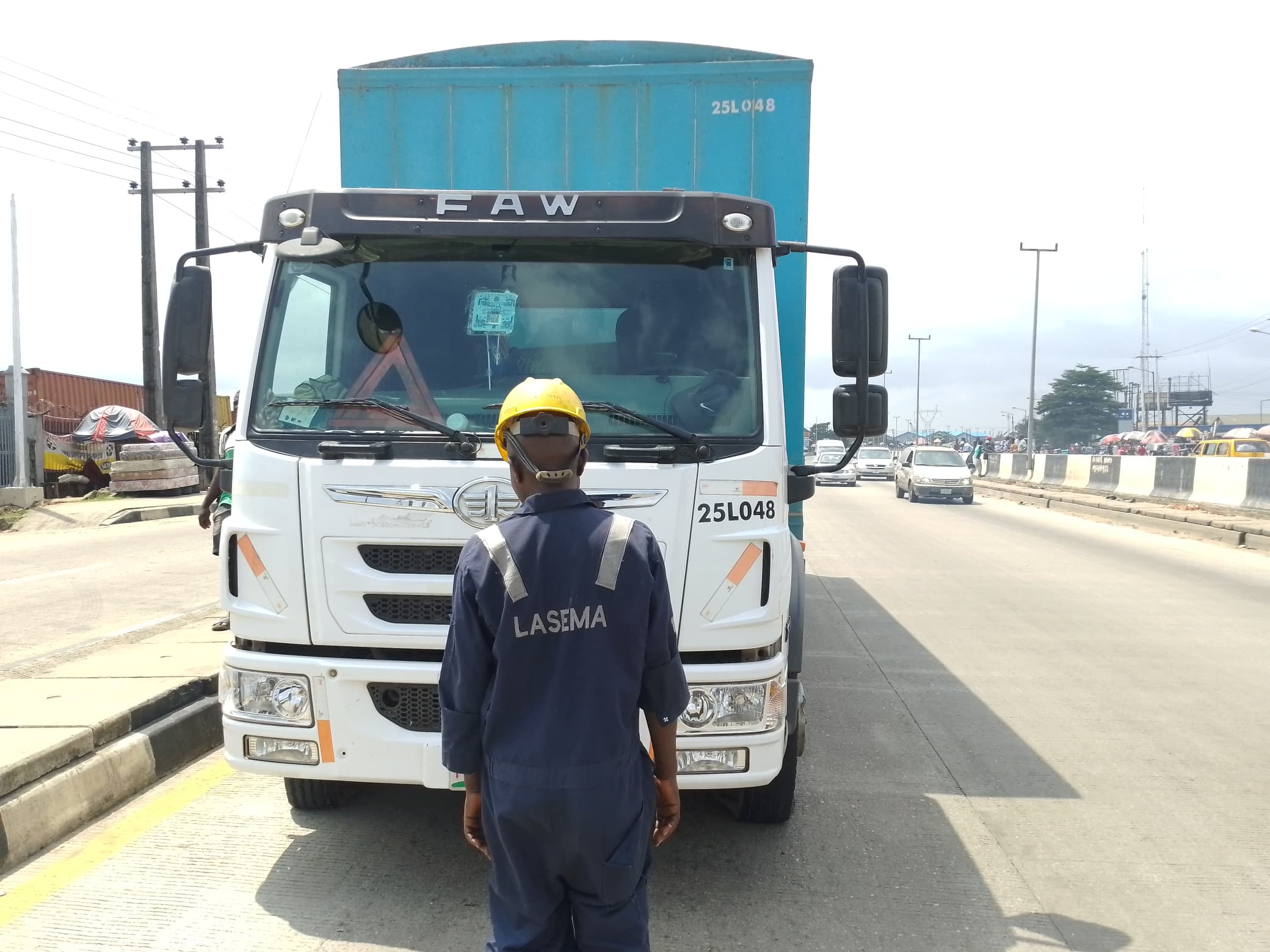
According to a statement signed by the Permanent Secretary of the Lagos State Emergency Management Agency (LASEMA), Dr Olufemi Damilola Oke-Osanyintolu, the first accident happened early in the morning at Sawmill, by Mowo Bus Stop, along the Badagry Expressway.
The second incident involved a multiple road traffic accident in the Ijesha, inward Mile 2, area of Lagos, where a dispatch rider lost his life.
The early morning incident, Oke-Osanyintolu disclosed, was a result of a collision between a Toyota Camry with registration number FKJ 630KS and an Iveco truck with registration number T28081 LA.
Five adult males, who were occupants of the Toyota Camry, died in the accident.
“Preliminary investigation revealed that the accident was caused by over-speeding and reckless driving on the part of the Toyota Camry driver.
Explaining the incident at the Ijesha, inward Mile 2, area of Lagos, LASEMA said it discovered that the incident involved a FAW truck with registration number T-30364LA, an Iveco truck with registration number KSF 958 XV, and a dispatch rider.
The FAW truck was said to have hit the Iveco truck while both vehicles were dragging for right of way, and in the process, the Iveco truck struck the dispatch rider from behind.
LASEMA boss further revealed that the multi-agency response team, including the LASEMA Dolphin Team, Lagos State Fire and Rescue Service, Lagos State Traffic Management Authority, LASTMA, FRSC and officers of the Nigeria Police Force, was involved in the rescue operation.
The Permanent Secretary, LASEMA, while commiserating with the families of the deceased, prayed for the repose of their souls.
He also urged all motorists to desist from over-speeding, wrongful overtaking and other dangerous driving practices, especially during early morning hours.
“Road safety is a shared responsibility, and adherence to traffic regulations remains critical to saving lives on Lagos roads.
“LASEMA reaffirms its commitment to prompt emergency response and inter-agency collaboration in line with the T.H.E.M.E.S+ Agenda of the Lagos State Government, aimed at protecting the lives and property of residents,” Oke –Osayintolu concluded.


Presidential candidate identifies Nigeria’s real problems

Grant Nnamdi Kanu Presidential Amnesty, Oluwo begs FG

DataPro to host international credit rating webinar in October
-

 Fashion9 years ago
These ’90s fashion trends are making a comeback in 2017
-
Entertainment9 years ago
The final 6 ‘Game of Thrones’ episodes might feel like a full season
-
Business9 years ago
The 9 worst mistakes you can ever make at work
-
Fashion9 years ago
According to Dior Couture, this taboo fashion accessory is back
-
Sports9 years ago
Steph Curry finally got the contract he deserves from the Warriors
-
Sports9 years ago
Phillies’ Aaron Altherr makes mind-boggling barehanded play
-
Business9 years ago
Uber and Lyft are finally available in all of New York State
-
Entertainment9 years ago
The old and New Edition cast comes together to perform