
News
Our migration deal with UK –FG







Igbokoda crash: Olugbo mourns victims, consoles Tinubu, Air Forc
The Olugbo of Ugboland, His Imperial Majesty, Oba Frederick Obateru Akinruntan, has condoled with President Bola Tinubu, the Air Force, and the families of those who lost their loved ones to the recent Nigerian Air Force (ANAF) ATR-42 crash.
Speaking during an assessment visit to the crash site, the Ondo State Commissioner of Police, Felix Ohuagwu, confirmed that there were no survivors from the impact.
“Officers of the State Marine Police, in active collaboration with the Nigerian Navy and local volunteers, have been working tirelessly in the swampy conditions to recover the remains of the victims and salvage the aircraft wreckage,” CP Ohuagwu stated.
Reacting to the disaster, Oba Akinruntan expressed deep sorrow over the tragedy occurring within his domain.
The revered monarch, through his spokesperson, Dr Ademibo Akingboye, extended his heartfelt condolences to the leadership of the Nigerian Air Force, the Federal Government and the grieving families of the fallen heroes.
Oba Akinruntan prayed for the repose of the souls of the departed officers and urged the nation to rally around bereaved families during this painful period.
Meanwhile, President Bola Ahmed Tinubu has expressed profound sadness over the tragic loss of military personnel, declaring three days of national mourning in honour of the deceased. The President has also ordered an immediate, full-scale investigation into the circumstances surrounding the crash.
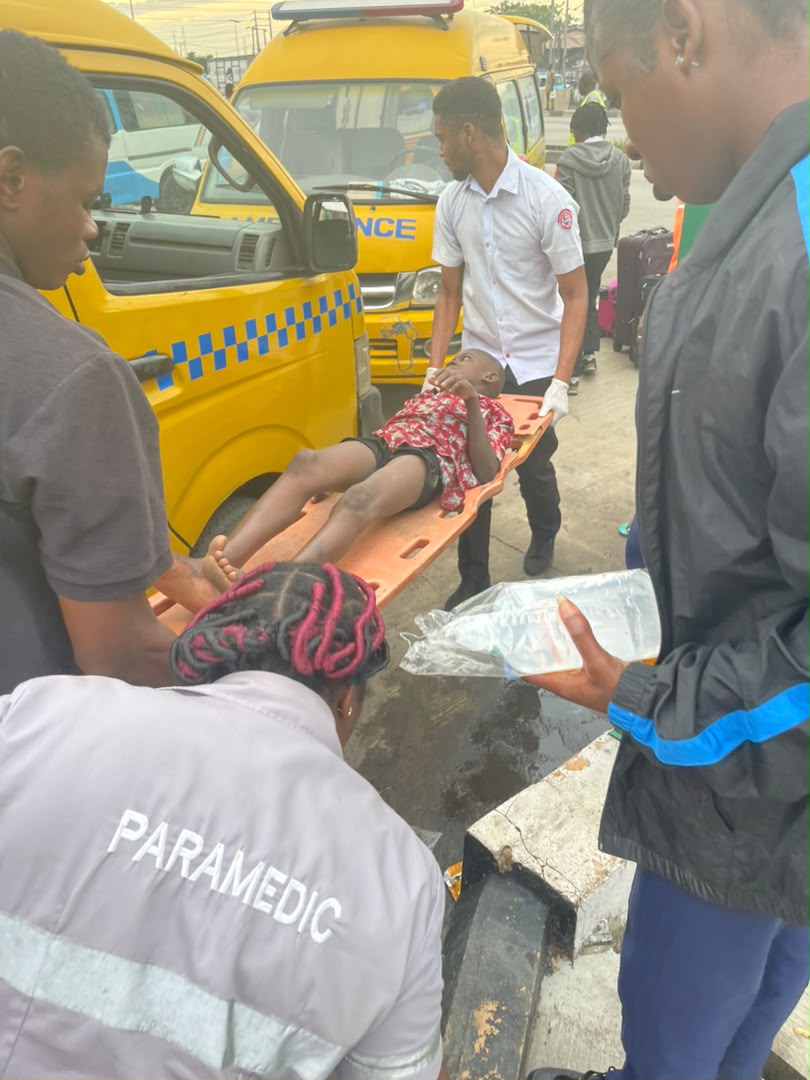
The Lagos State Emergency Management Agency (LASEMA) on Wednesday restored normalcy to Lagos roads after two separate accidents, one involving a teenager.
In a press statement signed by the agency’s Permanent Secretary, Dr Olufemi Damilola Oke-Osanyintolu, the first incident occurred at 5:10 am opposite the National Orthopaedic Hospital at Onipanu, inward Fadeyi, Lagos.
The agency swiftly deployed its team to the scene.
“Upon arrival, we discovered a road crash involving a HOWO truck with registration number T-36016LA and a black Toyota Camry with registration number FST-970KS, ” Oke-Osanyintolu disclosed.
A preliminary investigation revealed that reckless driving and overspeeding by the truck driver were responsible for the accident.
It was gathered that the Cobra Team of LASEMA, working collaboratively with officers of the Nigeria Police Force and LASTMA officials, promptly diverted traffic to forestall secondary crashes while undertaking recovery operations.
No life was lost. The affected Camry was evacuated and towed with the Agency’s light tow truck to Onipanu Police Station, while the truck was also driven to the station.
In the second incident recorded at 4:30 pm along the Onipanu BRT corridor inward Fadeyi, the Cobra Team responded within two minutes, arriving at 4:32 pm to find a teenage boy who had been hit by a vehicle while crossing the expressway and was in urgent need of medical attention, having sustained head and leg injuries in a hit-and-run.
The PS disclosed that the LASEMA team provided immediate assistance and ensured the swift transportation of the victim to the Trauma Centre for definitive medical care.
“Government reiterates its appeal to motorists to desist from reckless driving and overspeeding and to obey all traffic rules, while pedestrians are strongly advised to make use of provided pedestrian bridges and designated crossing points to avoid preventable tragedies.
“The protection of lives and property remains the top priority of the administration, and the state will continue to strengthen its emergency response architecture for the benefit of all Lagosians, ‘ Oke-Osanyintolu concluded.

The Lagos State Emergency Management Agency (LASEMA) successfully responded to a series of emergencies between Friday, September 25, and Sunday, September 27, 2026.
According to a statement signed by the Permanent Secretary of the agency, Dr Olufemi Damilola Oke-Osanyintolu, in the early hours of Friday, 25th September, following a distress call at 8:41am, the Alpha Eagle Team stationed at Cappa was immediately deployed to Palm Avenue Bus Stop, inward Oye, where a truck conveying a 40ft container had suffered a mechanical fault and become immobile, obstructing vehicular movement.
“The agency successfully recovered the broken-down truck off the road and safely parked it at a nearby layby, thereby restoring free flow of traffic,” Oke-Osanyintolu said.
That same evening, following a call received at 7:24pm, the Alpha Eagle Team was again deployed to Ojuwoye Bus Stop, inward Oshodi, where another containerised truck had suffered an electrical fault.
“The response team secured the scene, managed traffic effectively, and with the aid of the Super Metro, the truck was recovered and moved to a safe location, ensuring unhindered vehicular movement along the corridor.
“On Saturday, 26th September, the Agency responded to a serious Road Traffic Accident at Otedola, Mobil inward Berger, involving a Ford Escape SUV and a moving truck. Upon arrival at the scene at about 6:07am, the Tiger Squad from C3 discovered that the SUV had rammed into the truck from behind, resulting in injuries to an adult male driver and a female adult passenger. The Agency’s Paramedics, in collaboration with LASAMBUS, promptly administered first aid and provided immediate pre-hospital care before transporting the casualties to the Trauma Centre for further medical treatment. The Lagos State Fire and Rescue Service, LASTMA and the Nigeria Police Force were also present at the scene to ensure effective incident management. Both the affected truck and the SUV were thereafter moved to Isheri Police Station for further necessary action,” the PS said.
The Agency also successfully managed a truck breakdown at Olorunshogo Bus Stop, inward Cappa, on Friday evening, where a containerised truck became immobile due to a mechanical fault.
The vehicle was recovered with the aid of the Super Metro and relocated to a layby, while another breakdown involving a truck conveying interlocks at Ojuwoye was similarly recovered in the early hours of Sunday, 27th September, ensuring that all affected roads were cleared and reopened for public use.
The agency also responded to a fire outbreak at Bakare Street, Ojodu Berger, on Sunday afternoon.
Three out of eight shops stocked with foodstuffs and frozen foods had been engulfed by fire allegedly caused by an electrical surge following power restoration.
“The swift and professional intervention of the Tiger Squad and the Lagos State Fire and Rescue Service successfully contained the inferno, prevented it from spreading to other shops, and completely extinguished the fire. Fortunately, no loss of life was recorded,” disclosed the PS.
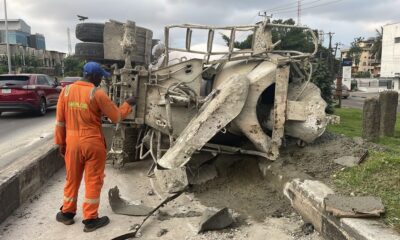
Also on Sunday, the Agency responded to a containerised truck incident at Shoprite, Inward Governor’s Road, where a 40ft loaded container detached from the turntable of a Sinotruk head and fell with its flatbed, fully obstructing a lane. The response team immediately secured the scene and implemented traffic management measures. Through a well-coordinated multi-agency effort involving the Agency’s Lowbed, a private tow truck, an empty Sinotruk for transloading and a private forklift, the Peak Milk products contained therein were successfully transloaded, the affected truck head was towed to the LASTMA yard, and the flatbed was uprighted and recovered to a nearby layby. The roadway was subsequently cleared and reopened for vehicular movement.
The Agency’s heavy-duty equipment, Hiab, was also deployed to Fagba Bus Stop, inward Iju, on Saturday evening to provide technical support for the safe hanging of a billboard, which was completed.
“All operations have been concluded, affected roadways have been restored, and response teams have returned to base in good condition.
“The Lagos State Government under the leadership of Mr Babajide Olusola Sanwo-Olu remains resolute in ensuring a safe and secure environment for all residents. The Agency reassures Lagosians of its continued readiness for prompt and professional emergency response at all times and urges all road users to adhere to safety regulations, ensure proper maintenance of vehicles and exercise caution while driving,” Oke-Osanyintolu concluded.


Igbokoda crash: Olugbo mourns victims, consoles Tinubu, Air Force

Accident: Normalcy returns to Lagos roads as LASEMA rescues hit-and-run victim

LASEMA responds to multiple emergencies
-

 Fashion9 years ago
These ’90s fashion trends are making a comeback in 2017
-
Entertainment9 years ago
The final 6 ‘Game of Thrones’ episodes might feel like a full season
-
Business9 years ago
3 Ways to make your business presentation more relatable
-
Business9 years ago
The 9 worst mistakes you can ever make at work
-
Fashion9 years ago
According to Dior Couture, this taboo fashion accessory is back
-
Sports9 years ago
Steph Curry finally got the contract he deserves from the Warriors
-
Fashion9 years ago
Model Jocelyn Chew’s Instagram is the best vacation you’ve ever had
-
Sports9 years ago
Phillies’ Aaron Altherr makes mind-boggling barehanded play