
Politics
SAN faults Lokoja court’s reversal of NDC registration judgment


A Senior Advocate of Nigeria (SAN) and policy analyst, Dr Monday Ubani, has criticised the recent decision of a High Court in Lokoja to set aside its earlier judgment directing the registration of the National Democratic Coalition (NDC) as a political party.
Ubani made his position known while responding to an opinion article by Charles Udeh published in The Whistler, in which the author applauded the court’s decision.
Udeh had argued that the earlier judgment was liable to be nullified because the Prominent Movement Party (PMP), whose logo was allegedly similar to that of the NDC, was not joined as a party to the suit.
He further maintained that the court’s decision was justified on the grounds of fair hearing, stressing that an interested party should not be bound by proceedings in which it was not represented.
However, Ubani disagreed with the position, faulting the legal basis for overturning the earlier judgment and raising concerns over the implications of the ruling.
A Senior Advocate of Nigeria and policy analyst, Dr Monday Ubani, has faulted the recent ruling by a Lokoja High Court
Setting aside its earlier judgment directing the registration of the National Democratic Coalition (NDC) as a political party.
Ubani, responding to an opinion written by Charles Udeh, which was published by The Whistler.
Udeh had, in the article, applauded the judgment of the Lokoja High Court.
According to Udeh, the earlier judgment was liable to be nullified because the Prominent Movement Party (PMP), whose logo was allegedly similar to that of the NDC, was not joined as a party to the proceedings.
He further contended that the decision was justified on grounds of fair hearing and the need to avoid prejudice to an interested party.
“The conclusion that the Lokoja Court was unquestionably right to revisit and nullify its earlier final judgment is, with respect, open to substantial legal challenge.
The first and perhaps most fundamental issue is the doctrine of functus officio. The law is settled that once a court has delivered a final judgment on the merits of a matter, it becomes functus officio and lacks jurisdiction to revisit the substance of that judgment except in very limited circumstances, such as correcting clerical mistakes, accidental slips, or where the judgment is shown to be a nullity.”
According to Ubani, in Adegoke Motors Ltd. v. Adesanya (1989) 3 NWLR (Pt. 109) 250, the Supreme Court emphatically held that a court cannot sit on appeal over its own final decision. Once judgment has been entered, the trial court’s jurisdiction over the matter is exhausted.
Ubani therefore sought clarity on whether the December 2025 judgment directing INEC to register the NDC was a final judgment on the merits.
He maintained that if it was, then the court could only revisit it if the judgment was shown to be a nullity. Mere disagreement with the decision or dissatisfaction by an affected third party cannot automatically revive the court’s jurisdiction.
“The proper avenue in such circumstances is ordinarily an appeal,” Ubani posited.
“The principal foundation of the argument supporting the court’s decision that PMP was not joined in the proceedings despite allegedly having an interest in the dispute concerning party logos.
“However, Nigerian procedural law has long rejected the proposition that every instance of non-joinder automatically renders proceedings a nullity.
Order 13 of the Federal High Court (Civil Procedure) Rules embodies the settled principle that no cause or matter shall be defeated merely by reason of misjoinder or non-joinder of parties. In Green v. Green (1987) 3 NWLR (Pt. 61) 480, the Supreme Court held that non-joinder does not necessarily invalidate proceedings where the court is otherwise able to effectively determine the issues before it. Likewise, in Peenok Investments Ltd. v. Hotel Presidential Ltd. (1982) 12 SC 1, the Supreme Court emphasised that the court’s focus should be on whether the issues can be effectively and completely determined between the parties before it, “Ubani stated further.
To the legal icon, the relevant inquiry, therefore, is not simply whether PMP ought to have been joined. “The real question is whether the absence of PMP deprived the court of jurisdiction or made it impossible for the court to adjudicate upon the dispute between NDC and INEC.
“If the primary issue before the court was whether INEC unlawfully refused registration of NDC, then it is arguable that the dispute could be resolved without necessarily making PMP a party, ” he stated furt
Ubani was of the view that there is a crucial distinction in law between a judgment that is wrong and a judgment that is a nullity.
According to him, “an erroneous judgment remains binding and enforceable until set aside on appeal. A null judgment, on the other hand, is void ab initio because the court lacked jurisdiction or because there was a fundamental defect that rendered the proceedings incompetent.
“The Supreme Court has consistently maintained this distinction. In First Bank of Nigeria Plc v. TSA Industries Ltd. (2010) 15 NWLR (Pt. 1216) 247, the Court reaffirmed that a final judgment remains valid and binding unless overturned by a competent appellate court.
Consequently, even if one assumes that the Lokoja Court erred in failing to join PMP, such an error would not automatically transform the judgment into a nullity. At best, it may constitute a ground of appeal.
“Those who support the setting aside of the judgment invoke Section 36 of the Constitution and the right to a fair hearing. Fair hearing is undoubtedly a cardinal constitutional principle.
However, it must be balanced against another equally important principle, which is the finality of litigation.
“The administration of justice would descend into uncertainty if every person who later claims to be affected by a judgment could return to the same court and invite it to reopen concluded proceedings. The Supreme Court has repeatedly warned against such an approach because it undermines public confidence in judicial decisions and erodes the certainty that final judgments are intended to provide. Indeed, the law’s insistence on appeals as the proper corrective mechanism is itself designed to preserve both fairness and finality.
“Another issue deserving consideration is whether PMP’s grievance should have been ventilated through appellate proceedings rather than through an application inviting the trial court to set aside its own judgment.
“The Supreme Court has recognised that a person directly affected by a judgment may, in exceptional circumstances, apply to have it set aside. However, such relief is ordinarily reserved for situations where the judgment is shown to be fundamentally defective or void. Authorities such as Obimonure v. Erinosho (1966) 1 All NLR 250 and Alor v. Ngene (2007) 17 NWLR (Pt. 1062) 163 demonstrate that such intervention remains exceptional and not routine.
The burden, therefore, rested heavily on the applicant to establish not merely prejudice, but a jurisdictional defect sufficient to render the earlier judgment a nullity.
“Beyond the strict legal arguments surrounding functus officio, non-joinder, and fair hearing, there is an equally important consideration which the court ought to have taken into account before setting aside its earlier judgment: the spirit and objectives of Nigeria’s electoral jurisprudence.
“The Electoral Act was enacted not merely to regulate elections but also to promote political participation, electoral certainty, democratic inclusiveness, and stability in the electoral process.
‘Courts have consistently recognised that election-related disputes should be resolved in a manner that advances, rather than undermines, democratic governance.
“At the time the judgment was set aside, the National Democratic Coalition (NDC) had already acquired legal recognition pursuant to the court’s earlier judgment and INEC’s consequent compliance therewith. The party had reportedly undertaken nationwide membership registration, submitted its membership register to INEC, established party structures across the country, conducted congresses and primaries, and produced candidates for forthcoming off-cycle elections as well as preparations for the 2027 general elections.
“These developments were neither speculative nor contingent. They represented accrued rights and legitimate expectations arising from a subsisting judgment of a competent court and actions taken in reliance upon that judgment,” said Ubani.
He stated further that the court ought to have considered the far-reaching consequences of its decision on thousands of party members, aspirants, candidates, supporters, and stakeholders who had acted in good faith on the strength of the earlier judgment. The law does not operate in a vacuum. Judicial decisions, particularly in electoral matters, must take account of their practical effect on democratic institutions and political stability.
“A situation where a political party, having been registered pursuant to a court order, has gone ahead to organise itself, recruit members, conduct primaries and produce candidates, only for the same court to subsequently nullify the foundation upon which those activities were undertaken, creates uncertainty and instability in the electoral process.”
He warned that such an outcome risks disenfranchising not only the party but also the citizens who have chosen to associate with it and contest elections under its platform.
“It is noteworthy that the applicant seeking the setting aside of the judgment had not acquired a comparable legal status or democratic stake in the process. Yet the court appeared prepared to sacrifice the accrued interests of an already registered political party and its supporters in favour of a party that INEC is yet to register. Whether this outcome accords with substantial justice is a legitimate question.
“The Supreme Court has repeatedly emphasised that the law should not be interpreted in a manner that defeats substantial justice or produces manifest absurdity. Electoral jurisprudence, in particular, should encourage certainty, predictability, and confidence in democratic institutions.
“The implications of this ruling extend beyond the NDC. If allowed to stand as a precedent, it may create a dangerous situation where political parties, candidates, and voters can no longer confidently rely on final judicial pronouncements. Such uncertainty is inimical to democratic development and may discourage political participation by emerging political groups seeking lawful access to the electoral space.
“With tremendous respect to the learned trial Judge, the decision appears to have paid insufficient attention to the broader democratic consequences of setting aside a judgment that had already produced extensive legal, political, and electoral consequences. Courts must remain vigilant not only in protecting procedural fairness but also in safeguarding the stability, certainty, and integrity of the democratic process.
“In a constitutional democracy that is still evolving, judicial decisions should strengthen democratic institutions and public confidence in the electoral system. Any decision capable of unsettling an entire political party, its candidates, and its supporters after substantial reliance has been placed on a subsisting judgment must be approached with the utmost caution. Failure to do so risks creating uncertainty that is not only legally problematic but potentially injurious to the health of Nigeria’s democracy, ” he said.
He warned that the debate surrounding the Lokoja Court’s decision was far from settled.
According to him, “while concerns about fair hearing and procedural justice are legitimate, it is respectfully submitted that the opposing view overstates the legal consequences of non-joinder and understates the significance of the doctrine of functus officio.
“The more compelling legal position appears to be that if the earlier judgment was indeed a final judgment on the merits, which I believe it is, the trial court had exhausted its jurisdiction and could not ordinarily reopen the matter except upon proof of a fundamental nullity which in the present circumstance does not exist.
“Equally important is the fact that the setting aside of the judgment appears not to have sufficiently accounted for the practical realities created by the earlier decision. By the time the judgment was nullified, a political party had already emerged through legal recognition of INEC, mobilised members nationwide, conducted congresses and primaries, and produced candidates in preparation for off-cycle elections and the 2027 general elections. These are not insignificant developments that can be ignored without profound consequences for democratic participation and electoral certainty.
“Whether the failure to join PMP reached the threshold of a jurisdictional defect capable of nullifying the earlier judgment remains a question that will ultimately require authoritative determination by the Court of Appeal or, eventually, the Supreme Court.
“Until then, it is difficult to conclude with certainty that the Lokoja Court was right to set aside its own final judgment. There are substantial legal grounds for the contrary view. More importantly, there are compelling constitutional and democratic considerations which suggest that the court ought to have exercised greater restraint before making a decision capable of unsettling accrued rights, legitimate expectations, and the political aspirations of thousands of Nigerians who had acted in reliance on a subsisting judgment of a competent court.
“The law must protect fair hearing, but it must also protect certainty, stability, and democratic participation. A balance that sacrifices the latter at the altar of an expansive interpretation of non-joinder risks creating a precedent that may ultimately weaken rather than strengthen Nigeria’s constitutional democracy,” Ubani concluded.

Former Majority Leader of the House of Representatives, Hon. Mulikat Adeola Akande, has urged Nigerians to rally behind the presidential candidate of the Social Democratic Party (SDP), Prince Adewole Adebayo, saying the country cannot afford to miss what she described as an opportunity for genuine change in 2027.
Akande spoke at the public presentation of Adebayo’s book, Farewell to Poverty and Insecurity: Governance and Accelerated Development — Blueprint of a New Nigeria, 2027–2031, where she expressed strong confidence in the SDP candidate’s capacity to transform the country.
The former federal lawmaker challenged Nigerians who continue to dismiss the SDP as a small political party, arguing that the size of a political platform should not determine the quality of leadership it can produce.
According to her, Adebayo has presented himself and his policies to Nigerians and has demonstrated a willingness to devote himself fully to changing the country.
“Each time I hear the presidential candidate speak in public, I just pity Nigerians because it is so easy to see someone who can take you to the promised land,” Akande said.
She urged Nigerians not to let the SDP’s relatively small political structure discourage them from considering Adebayo for the presidency.
“People believe, ‘Oh, SDP is a small party. We don’t know. They only want to align with the big parties,’” she said, insisting that Nigerians should instead focus on the candidate and what he has offered to the country.
Akande said the responsibility for determining Nigeria’s future ultimately rests with citizens, warning that future generations would hold Nigerians accountable for the decisions they make at the 2027 election.
“The earlier we begin to think in the right direction, the better,” she said. “He has offered himself. He has offered everything that he has to ensure that this country changes.”
She questioned why Nigerians would continue to support political actors they believe are responsible for the country’s current challenges while ignoring an alternative that has presented itself before them.
“Do we like what is going wrong right now? And you know the people who are causing this, and you are still standing by them. What else do you want?” she asked.
The former Majority Leader also dismissed concerns that Adebayo’s promises could amount to the same political rhetoric Nigerians have heard from politicians in the past.
She argued that the SDP candidate had gone beyond merely making political statements by outlining his policies and what he intends to accomplish if elected.
“He has told you his policies. He has told you what he can do,” she said.
Akande also urged SDP supporters to take the party’s message beyond the gathering, calling on them to mobilise Nigerians ahead of the 2027 presidential election.
“Just like the Prophet Elbuba said, everybody go out there and get people to believe in what we are doing in the SDP,” she said.
Emphasising that the movement should not be reduced to the ambitions of individual politicians, Akande said the ultimate objective was to rescue the country from its current difficulties.
“It is not about me. It is not about him. It is about the country,” she declared.
She warned that Nigerians could regret failing to seize what she described as an opportunity for change in 2027.
“The earlier we catch on to this opportunity, the better for us,” Akande said, adding that Nigerians should carefully consider the consequences if the opportunity was missed after the 2027 election.
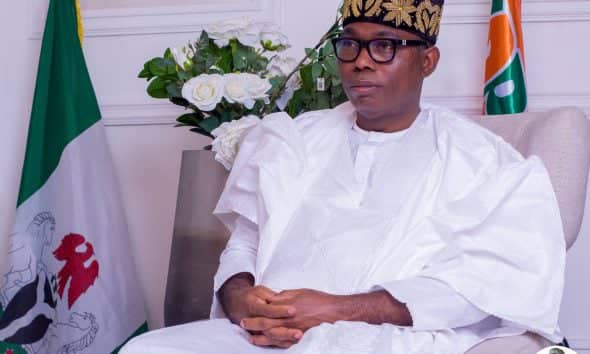
The presidential candidate of the Social Democratic Party (SDP), Prince Adewole Adebayo, has proposed a governance model that combines the vigour of private enterprise with an interventionist state focused on fulfilling citizens’ basic needs.
The proposal is outlined in his 2027–2031 governance blueprint, titled ‘Farewell to Poverty and Insecurity,’ which identifies social democracy and the basic needs approach as the core pillars of his proposed administration.
Rather than viewing economic growth as an end in itself, Adebayo’s blueprint contends that development must ultimately lead to a dignified and productive life for ordinary Nigerians.
Under this model, markets and private enterprise would remain vital drivers of innovation and economic growth, while government would intervene strategically where markets fall short, essential public goods are at risk, or national development calls for catalytic investment.
The blueprint lists security, food, clean water, affordable energy, healthcare, education, housing, decent work, mobility, justice, environmental quality, and digital connectivity as interconnected foundations of national productivity and citizenship.
This approach marks a substantial shift from measuring national progress solely through GDP figures, government revenue, or infrastructure projects.
In ‘Farewell to Poverty and Insecurity,’ Adebayo argues that the true measure of governance is whether Nigerians see tangible improvements in their everyday lives.
The philosophy also forms part of the broader argument in the blueprint that Nigeria needs both a capable state and a productive private sector.
Its executive message dismisses what it describes as a false dichotomy between an active state and a thriving market, asserting that Nigeria requires a public authority capable of guaranteeing essential public goods alongside a competitive private economy capable of investing, producing, and creating jobs.
For Adebayo, therefore, social democracy is not a rejection of capitalism or private enterprise. Instead, it is a framework through which economic activity is expected to serve larger social goals.
The core proposition of the blueprint is that prosperity must be linked to human welfare—and that government should be judged by whether citizens can genuinely feel the benefits of national development.
This philosophy permeates the document’s proposals on security, agriculture, employment, education, healthcare, housing, infrastructure, and social protection.
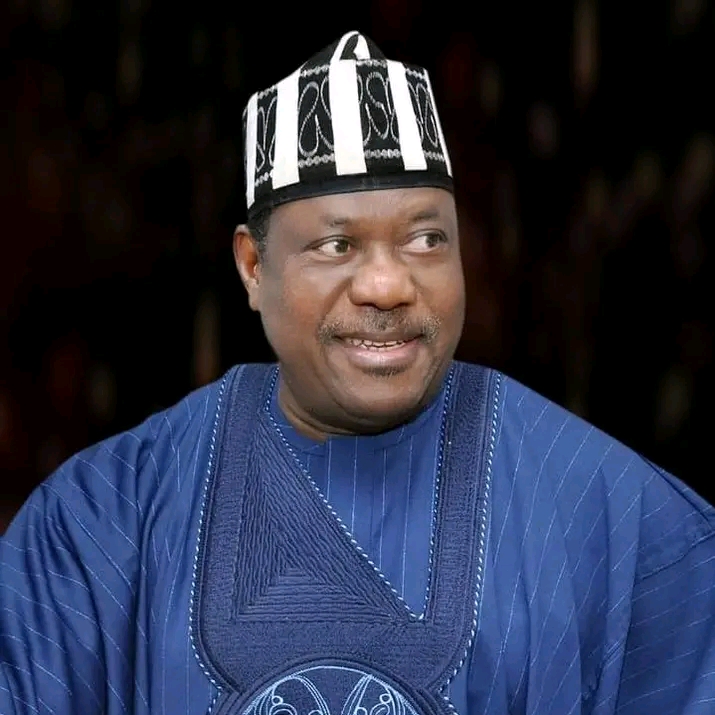
All North Central For Asiwaju 2027, a political group of indigenes and non-indigenes resident in the North Central region of Nigeria has unanimously decried the exclusion of the name of the Father and Leader of North Central George Akume from the PPC list recently published by the APC for its Presidential campaign.
The group stated unequivocally that the error of omitting the name of the Secretary to the Government of the Federation from the list will be inimical to the success of President Bola Ahmed Tinubu in the North Central in the 2027 Presidential election.
In a statement jointly signed by the Convener/ Director General of the group Chief Ewie Aimienwauu, the National Coordinator, Honorable Marcellinus Ozoemena Njoku and all the State Coordinators, the group humbly appealed to the President to “withdraw the PPC list and correct this error amongst many others which are not of particular interest to our association exclusively.”
The statement noted that the SGF as the engine room of the Tinubu administration offers a credible and informed view of the government’s success so far, a quality which is germane for issue based campaign as being requested by Mr. President.
It further said that the “pivotal role of the Leader on the North Central brokering peace, being an accessible father of all, a rallying point and stabiliser puts him at the front lines of getting the Middle Belt people to support the re-election bid of Mr. President.
“The President has done extremely well, but we need several gentle, confident, publicly loved, and informed voices to take the message to the people. The SGF is this kind of person, dependable forthright, loved, accessible, approachable, caring, and above all, a great apostle of the re-election of President Bola Ahmed.
“Without being an alarmist, we all remember how the Muslim-Muslim ticket and the insurgency fared at the 2023 polls in the North Central Zone. That unpleasant situation must be prevented in 2027. This can only sincerely be mitigated in 2027 with our father and Leader of the North Central assuring the people and pointing out personally, how much more the Zone has fared under President Bola Ahmed Tinubu.
“All hands must be on deck to campaign, mobilise, and ensure victory for our hardworking President and our great party come 2027.”


Igbokoda crash: Olugbo mourns victims, consoles Tinubu, Air Force

Accident: Normalcy returns to Lagos roads as LASEMA rescues hit-and-run victim

LASEMA responds to multiple emergencies
-

 Fashion9 years ago
These ’90s fashion trends are making a comeback in 2017
-
Entertainment9 years ago
The final 6 ‘Game of Thrones’ episodes might feel like a full season
-
Business9 years ago
3 Ways to make your business presentation more relatable
-
Business9 years ago
The 9 worst mistakes you can ever make at work
-
Fashion9 years ago
According to Dior Couture, this taboo fashion accessory is back
-
Sports9 years ago
Steph Curry finally got the contract he deserves from the Warriors
-
Fashion9 years ago
Model Jocelyn Chew’s Instagram is the best vacation you’ve ever had
-
Sports9 years ago
Phillies’ Aaron Altherr makes mind-boggling barehanded play