
Politics
Ondo APC: What manner of stakeholders’ meeting?

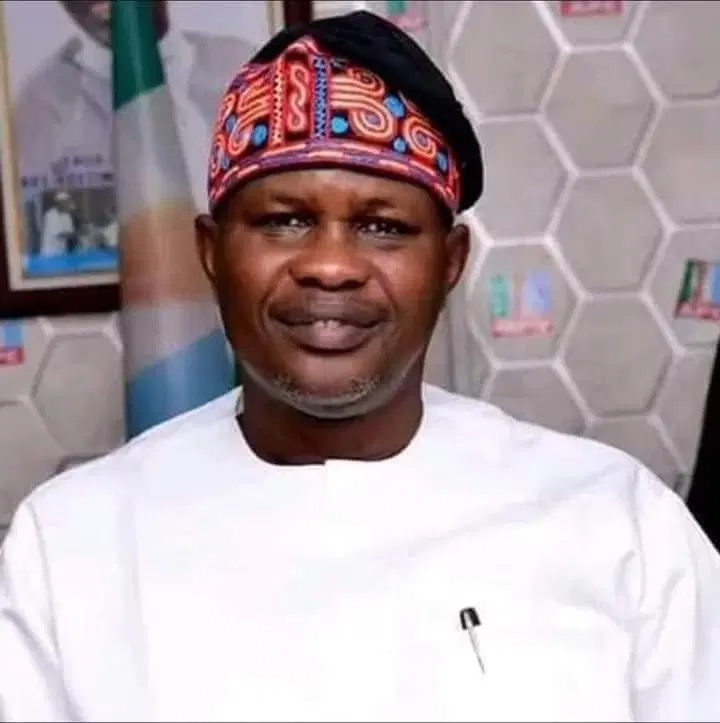
Ayodeji Ologun
In the aftermath of the turbulent events of Tuesday, 17th February 2026, the political structure of the All Progressives Congress (APC) in Ondo State has been profoundly unsettled. What occurred at the APC State Secretariat in Akure transcended the boundaries of a mere intra-party disagreement. By every constitutional and democratic standard, it amounted to a grave assault on party discipline, institutional decorum, and the rule of law.
It is now a fact that the embattled APC State Chairman, Engr. Ade Adetimehin, together with other respected stakeholders, were publicly humiliated and physically assaulted within the premises that ought to embody unity, dialogue, and democratic engagement. The invasion and desecration of the party secretariat by individuals reportedly identified as thugs and hoodlums represent a serious breach of political ethics and a violation of the fundamental right to freedom of association as guaranteed under Nigeria’s constitutional framework.
Even more troubling is the alleged involvement and implicit endorsement of these actions by one of the party leaders in the state. His presence at the Secretariat thereafter, where he presided over what was described as a ‘Stakeholders Meeting,’ has generated significant legal and moral concerns. A critical question arises: can a meeting convened in the shadow of violence, and marked by the conspicuous exclusion of key party leaders, legitimately be described as a stakeholders’ assembly? Or was it a selective gathering designed to create an appearance of legitimacy for an otherwise controversial process?
In constitutional and political terms, stakeholders are not transient loyalists or handpicked associates. They are individuals whose service, sacrifices, and offices have shaped the party’s evolution and sustained its institutional integrity. It is therefore necessary to question whether the following categories of party leaders were deliberately sidelined:
Former and serving Senators; former and serving members of the House of Representatives; former cabinet members; former and serving ministers; members of the APC Elders’ Forum.
Are these distinguished figures no longer regarded as custodians of the party’s collective heritage and institutional memory? Has their exclusion been justified under a questionable assertion of executive dominance within party affairs? The optics are deeply concerning, and the implications are even more profound.
Reports indicate that those prominently present at the meeting included Hon. (Asiwaju) Ifedayo Abegunde (ABENA) and Rt. Hon. Oladiji Olamide (LANDMARK), Speaker of the Ondo State House of Assembly. However, the noticeable absence of a wide range of established party leaders rendered the meeting visibly unbalanced. Observers noted an air of unease, suggesting that the gathering lacked the inclusiveness and authority expected of a genuine stakeholders’ forum.
Equally remarkable was the appointment of Barr. Tolulope Babaleye as spokesman for the North Senatorial District at the meeting—a development that has attracted criticism and skepticism. To many, this reinforced the perception that the assembly was less a broad-based consultative forum and more a carefully curated congregation of select allies.
Consequently, by objective standards of internal democracy and political propriety, the event risks being remembered not as an APC Stakeholders Meeting, but as what critics have described as a ‘Lucky Family Meeting.’ Though satirical in tone, the label reflects the growing sentiment that personal affiliations, rather than institutional representation, defined the composition of the gathering.
In any constitutional democracy, political parties are expected to reflect internally the democratic principles they advocate publicly. Violence, exclusion, and unilateral decision-making are fundamentally inconsistent with those principles. If the APC in Ondo State is to safeguard its credibility, unity, and electoral prospects, it must ensure a transparent review of the events of February 17th, reaffirm the supremacy of its constitution, and recommit itself to inclusiveness, due process, and respect for democratic norms.
For in politics, as in law, legitimacy does not emanate from power alone; it is derived from consensus, participation, and steadfast adherence to constitutional order.
More disturbing was the majestic and triumphant entry of one of the party leaders to the Party Secretariat in the company of the thugs who had hitherto openly humiliated the incumbent Party State Chairman, Engr. Ade Adetimehin.
More worrisome was the unsavoury, seemingly endorsement speech of a party leader who apparently failed to condemn the daylight invasion of the Secretariat or sympathetic to the fate of the Party State Chairman and scores of victims of his motivated attack on the vulnerable.
In a more poetic candour and manner, the party leader spoke like Mark Antony at the burial site of Julius Caesar and continued to mock Engr. Adetimehin.
*Dr Ologun is the Director of Communications and Strategy, Asiwaju Mandate Group.

Former Majority Leader of the House of Representatives, Hon. Mulikat Adeola Akande, has urged Nigerians to rally behind the presidential candidate of the Social Democratic Party (SDP), Prince Adewole Adebayo, saying the country cannot afford to miss what she described as an opportunity for genuine change in 2027.
Akande spoke at the public presentation of Adebayo’s book, Farewell to Poverty and Insecurity: Governance and Accelerated Development — Blueprint of a New Nigeria, 2027–2031, where she expressed strong confidence in the SDP candidate’s capacity to transform the country.
The former federal lawmaker challenged Nigerians who continue to dismiss the SDP as a small political party, arguing that the size of a political platform should not determine the quality of leadership it can produce.
According to her, Adebayo has presented himself and his policies to Nigerians and has demonstrated a willingness to devote himself fully to changing the country.
“Each time I hear the presidential candidate speak in public, I just pity Nigerians because it is so easy to see someone who can take you to the promised land,” Akande said.
She urged Nigerians not to let the SDP’s relatively small political structure discourage them from considering Adebayo for the presidency.
“People believe, ‘Oh, SDP is a small party. We don’t know. They only want to align with the big parties,’” she said, insisting that Nigerians should instead focus on the candidate and what he has offered to the country.
Akande said the responsibility for determining Nigeria’s future ultimately rests with citizens, warning that future generations would hold Nigerians accountable for the decisions they make at the 2027 election.
“The earlier we begin to think in the right direction, the better,” she said. “He has offered himself. He has offered everything that he has to ensure that this country changes.”
She questioned why Nigerians would continue to support political actors they believe are responsible for the country’s current challenges while ignoring an alternative that has presented itself before them.
“Do we like what is going wrong right now? And you know the people who are causing this, and you are still standing by them. What else do you want?” she asked.
The former Majority Leader also dismissed concerns that Adebayo’s promises could amount to the same political rhetoric Nigerians have heard from politicians in the past.
She argued that the SDP candidate had gone beyond merely making political statements by outlining his policies and what he intends to accomplish if elected.
“He has told you his policies. He has told you what he can do,” she said.
Akande also urged SDP supporters to take the party’s message beyond the gathering, calling on them to mobilise Nigerians ahead of the 2027 presidential election.
“Just like the Prophet Elbuba said, everybody go out there and get people to believe in what we are doing in the SDP,” she said.
Emphasising that the movement should not be reduced to the ambitions of individual politicians, Akande said the ultimate objective was to rescue the country from its current difficulties.
“It is not about me. It is not about him. It is about the country,” she declared.
She warned that Nigerians could regret failing to seize what she described as an opportunity for change in 2027.
“The earlier we catch on to this opportunity, the better for us,” Akande said, adding that Nigerians should carefully consider the consequences if the opportunity was missed after the 2027 election.
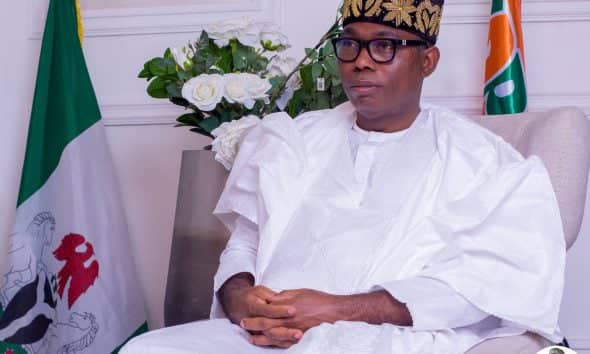
The presidential candidate of the Social Democratic Party (SDP), Prince Adewole Adebayo, has proposed a governance model that combines the vigour of private enterprise with an interventionist state focused on fulfilling citizens’ basic needs.
The proposal is outlined in his 2027–2031 governance blueprint, titled ‘Farewell to Poverty and Insecurity,’ which identifies social democracy and the basic needs approach as the core pillars of his proposed administration.
Rather than viewing economic growth as an end in itself, Adebayo’s blueprint contends that development must ultimately lead to a dignified and productive life for ordinary Nigerians.
Under this model, markets and private enterprise would remain vital drivers of innovation and economic growth, while government would intervene strategically where markets fall short, essential public goods are at risk, or national development calls for catalytic investment.
The blueprint lists security, food, clean water, affordable energy, healthcare, education, housing, decent work, mobility, justice, environmental quality, and digital connectivity as interconnected foundations of national productivity and citizenship.
This approach marks a substantial shift from measuring national progress solely through GDP figures, government revenue, or infrastructure projects.
In ‘Farewell to Poverty and Insecurity,’ Adebayo argues that the true measure of governance is whether Nigerians see tangible improvements in their everyday lives.
The philosophy also forms part of the broader argument in the blueprint that Nigeria needs both a capable state and a productive private sector.
Its executive message dismisses what it describes as a false dichotomy between an active state and a thriving market, asserting that Nigeria requires a public authority capable of guaranteeing essential public goods alongside a competitive private economy capable of investing, producing, and creating jobs.
For Adebayo, therefore, social democracy is not a rejection of capitalism or private enterprise. Instead, it is a framework through which economic activity is expected to serve larger social goals.
The core proposition of the blueprint is that prosperity must be linked to human welfare—and that government should be judged by whether citizens can genuinely feel the benefits of national development.
This philosophy permeates the document’s proposals on security, agriculture, employment, education, healthcare, housing, infrastructure, and social protection.
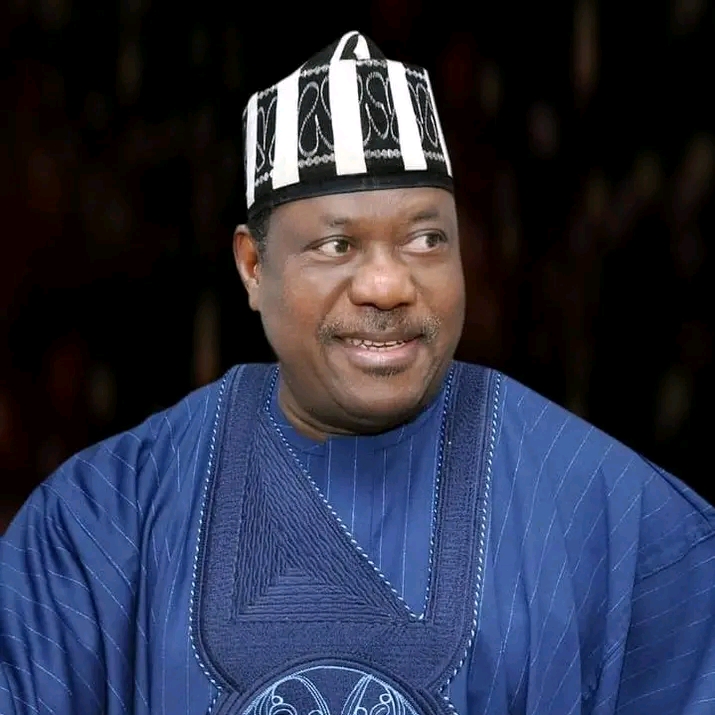
All North Central For Asiwaju 2027, a political group of indigenes and non-indigenes resident in the North Central region of Nigeria has unanimously decried the exclusion of the name of the Father and Leader of North Central George Akume from the PPC list recently published by the APC for its Presidential campaign.
The group stated unequivocally that the error of omitting the name of the Secretary to the Government of the Federation from the list will be inimical to the success of President Bola Ahmed Tinubu in the North Central in the 2027 Presidential election.
In a statement jointly signed by the Convener/ Director General of the group Chief Ewie Aimienwauu, the National Coordinator, Honorable Marcellinus Ozoemena Njoku and all the State Coordinators, the group humbly appealed to the President to “withdraw the PPC list and correct this error amongst many others which are not of particular interest to our association exclusively.”
The statement noted that the SGF as the engine room of the Tinubu administration offers a credible and informed view of the government’s success so far, a quality which is germane for issue based campaign as being requested by Mr. President.
It further said that the “pivotal role of the Leader on the North Central brokering peace, being an accessible father of all, a rallying point and stabiliser puts him at the front lines of getting the Middle Belt people to support the re-election bid of Mr. President.
“The President has done extremely well, but we need several gentle, confident, publicly loved, and informed voices to take the message to the people. The SGF is this kind of person, dependable forthright, loved, accessible, approachable, caring, and above all, a great apostle of the re-election of President Bola Ahmed.
“Without being an alarmist, we all remember how the Muslim-Muslim ticket and the insurgency fared at the 2023 polls in the North Central Zone. That unpleasant situation must be prevented in 2027. This can only sincerely be mitigated in 2027 with our father and Leader of the North Central assuring the people and pointing out personally, how much more the Zone has fared under President Bola Ahmed Tinubu.
“All hands must be on deck to campaign, mobilise, and ensure victory for our hardworking President and our great party come 2027.”


Igbokoda crash: Olugbo mourns victims, consoles Tinubu, Air Force

Accident: Normalcy returns to Lagos roads as LASEMA rescues hit-and-run victim

LASEMA responds to multiple emergencies
-

 Fashion9 years ago
These ’90s fashion trends are making a comeback in 2017
-
Entertainment9 years ago
The final 6 ‘Game of Thrones’ episodes might feel like a full season
-
Business9 years ago
3 Ways to make your business presentation more relatable
-
Business9 years ago
The 9 worst mistakes you can ever make at work
-
Fashion9 years ago
According to Dior Couture, this taboo fashion accessory is back
-
Sports9 years ago
Steph Curry finally got the contract he deserves from the Warriors
-
Sports9 years ago
Phillies’ Aaron Altherr makes mind-boggling barehanded play
-
Fashion9 years ago
Model Jocelyn Chew’s Instagram is the best vacation you’ve ever had